As the weather cools down and outdoor projects wrap up, the garage becomes the workspace again. Oil changes, brake jobs, winter tire swaps, and storage-season prep all happen under fluorescent lights on concrete floors. The right small tools and accessories make that time more productive and less painful — literally, if your current creeper has a flat wheel and your work light is a flashlight clenched between your teeth.
None of these items will break the bank, and all of them earn their shelf space through daily use.
Key takeaways
- A rechargeable LED work light eliminates the extension-cord tangle and dead-zone shadows.
- A decent creeper saves your back and knees on every under-car job.
- Mechanic’s gloves protect hands without killing dexterity.
- Magnetic trays prevent the heartbreak of a bolt rolling into an unreachable corner.
- Buy quality on the items you use every session and save money on the rest.
Work lights that actually help
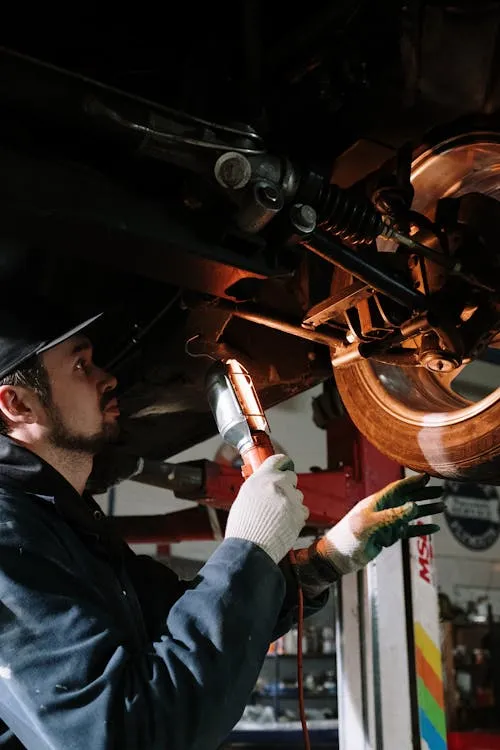
The single best garage upgrade most DIYers can make is better lighting. A rechargeable LED work light with a magnetic base and a hook gives you bright, directed light exactly where you need it — inside an engine bay, under a dashboard, or aimed at a brake caliper.
The Braun Slim Bar Rechargeable LED Work Light is a solid pick for under-car and engine-bay work. It is slim enough to fit into tight spaces, the magnetic base sticks to any steel surface, and the rechargeable battery lasts long enough for most sessions without needing a cord.
For broader shop lighting, a portable LED floodlight on a tripod stand fills in for overhead fixtures that never seem to illuminate the area you are actually working in. Set one up on each side of the car during a brake or suspension job and the difference is immediate.
Good light does not just make work easier — it makes work safer. You catch problems you would miss in shadow, and you are less likely to fumble a tool or cross-thread a fastener when you can clearly see what your hands are doing.
Creepers that do not punish you
If you spend any time under a car, a creeper is not optional — it is the difference between getting work done and dreading every oil change. The cheap creepers with hard plastic wheels and a thin pad are barely better than lying on cardboard.
The Pro-Lift Mechanic’s Creeper is a significant step up without spending heavy-duty-shop money. It rolls smoothly on six casters, the padded surface is thick enough to keep your back off the concrete, and the headrest positions your neck so you can actually see what you are working on.
If you do not want to store a full creeper, a folding mechanic’s pad or a thick foam kneeling pad handles shorter jobs. These are also useful for wheel and brake work where you are kneeling beside the car rather than sliding under it.
The key is not spending the most money — it is having something that makes under-car work comfortable enough that you do not rush through it. Rushing under a car is how fasteners get stripped and knuckles get skinned.
Mechanic’s gloves worth wearing
Bare hands work fine until they do not. Hot exhaust components, sharp sheet-metal edges, and chemical solvents all make a case for gloves. The trick is finding gloves with enough dexterity that you can actually feel fasteners and handle small parts.
Mechanix Wear Original Gloves have been a shop staple for years because they hit the balance point. Thin enough to feel a bolt head, tough enough to protect against abrasion and mild heat, and cheap enough to replace when they wear out. They are not rated for heavy chemical exposure — use nitrile disposables for oil and solvent work — but for general wrenching, they are hard to beat.
Keep a box of nitrile gloves on your workbench too. They slip on in seconds for oil changes, brake fluid bleeding, and any job involving grease or chemicals you do not want soaking into your skin. The combination of nitrile for dirty work and Mechanix for wrenching covers every garage scenario.
Magnetic trays save hardware and sanity
A bolt that rolls off a fender and disappears under the car costs five minutes of frustration minimum — more if it lands in a place you cannot reach without moving the car. Magnetic parts trays eliminate this entirely.
A stainless steel magnetic tray sits on any flat surface or sticks to the fender, valve cover, or frame rail. Drop bolts, nuts, and washers into it as you remove them, and they stay put even if the tray gets bumped.
Buy at least two. One stays on the workbench, one follows you to the car. Some people use a small magnetic tray on the creeper itself so hardware is always within reach during under-car work.
These cost almost nothing and prevent the single most annoying problem in garage work: hunting for hardware that should be right there but is not.
Organize the bench, not just the tools
A clean workbench makes everything faster. Spend twenty minutes at the start of the season clearing accumulated clutter, wiping down surfaces, and putting tools back where they belong. A wall-mounted pegboard or magnetic tool strip keeps frequently used wrenches and screwdrivers visible and accessible instead of buried in a drawer.
Small shelf bins for common consumables — zip ties, electrical tape, wire connectors, hose clamps — prevent the “I know I have some somewhere” problem. Label them, keep them stocked, and you will waste less time walking to the auto parts store mid-project.
The goal is not a magazine-cover garage. It is a space where you can find what you need, work without fighting your environment, and put things away without a strategy meeting.
Helpful references
Bottom line
Good garage gear does not have to be expensive. A decent work light, a creeper that does not punish your back, gloves that let you feel what you are doing, and magnetic trays that keep hardware from disappearing — those four items make every project faster and more enjoyable. Buy them once, use them every session.