Ceramic coatings for wheels started out as a professional-only product for show cars and high-end detailing clients. They’re now mainstream — available in DIY formulations, advertised everywhere, and marketed with claims that range from “reasonable” to “laughable.” The actual benefits are real for the right use case, but the product variance is wide and the application method matters as much as the product. After running several different products across a full season of real use, here’s what actually works and when the premium is worth paying.
Key takeaways
- Ceramic coatings meaningfully reduce the effort required to clean brake dust and road grime off wheels
- The protection is real but time-limited — most coatings degrade significantly after 8–14 months of daily use
- Application preparation (decontamination, clay, panel prep) matters more than the specific product chosen
- Professional-grade products generally outperform DIY formulations but require more careful application
- Heat exposure from aggressive braking accelerates coating breakdown and is the most common failure mode
What ceramic coating actually does
A ceramic wheel coating is a clear, hard, glass-like polymer film applied to the wheel surface after thorough cleaning and decontamination. Its primary benefit isn’t appearance — it’s the dramatic reduction in surface tension between wheel and contaminants. Brake dust, tar, and road grime that would normally bond to a bare wheel surface instead sit on top of the coating and wash off with a rinse.
For daily drivers, this translates to wheels that stay visibly clean between washes with minimal effort. A car that required 20 minutes per wheel of scrubbing to remove accumulated brake dust now takes 3–5 minutes per wheel. Multiplied across the season, the time savings are real. The appearance benefit comes indirectly — wheels that are easier to clean get cleaned more often, and consistently clean wheels always look better than periodically-cleaned ones.
The coating also provides some protection against chemical attack from aggressive wheel cleaners, tar removers, and heavy brake dust concentrations that would otherwise etch the wheel’s protective finish over time.
Durability realities
Manufacturer claims about coating durability range from 12 months to 5 years. The actual performance, for wheels specifically, is more limited than those headline numbers suggest. Wheels see thermal cycling from brake heat, chemical exposure from aggressive cleaners, abrasion from tire mounting/dismounting, and impact from debris — all of which degrade coatings faster than the body paint exposure they were primarily designed for.
Realistic expectations for daily-driven applications:
- Professional-grade products with proper application: 12–18 months of effective protection
- Mid-tier DIY products with good application: 8–12 months
- Budget DIY products: 4–8 months
- Track-use or aggressive-braking applications: reduce all of the above by 30–50%
The coating doesn’t fail all at once — it gradually loses hydrophobic behavior and stops repelling contamination as effectively. The decision point for reapplication is when wheel cleaning starts feeling like pre-coating work again.
Preparation matters more than product
The number one reason coatings fail prematurely is inadequate preparation. A coating applied over residual contamination, old wax, or incomplete wheel cleaning bonds poorly and lifts within weeks. The preparation sequence that gives coatings their rated life:
- Thorough wheel cleaning with a dedicated iron remover — the purple-reaction wheel cleaners that break down brake dust and embedded iron particles are non-optional for this step
- Clay bar treatment on each wheel face, barrel, and spoke surface — the clay pulls the contamination that the iron remover dislodged but didn’t wash away
- Isopropyl alcohol wipedown to remove any clay residue and surface oils
- Complete drying in a dust-free environment
- Application per the specific product’s directions — layer count, cure time, and wipe-off timing vary by product
Skipping any of these steps compromises the coating’s bond. Professional applications take 4–6 hours per wheel and include this full preparation sequence. DIY applications often rush the prep and apply over wheels that have residual contamination — the coating goes on, looks fine initially, and fails within months.
Professional vs. DIY products
Professional-grade products (GTechniq, Gyeon, CarPro, System X) use harder coating chemistries with higher glass content that cure to a more durable film. They also tend to have tighter application windows — the time you have between applying the coating and needing to wipe off excess product is short, and missing that window leaves high spots that are hard to remove.
DIY products (Chemical Guys, CarPro Cquartz Lite, Adam’s Polishes) use less aggressive chemistries that are more forgiving of application errors but don’t cure as hard. For an experienced home detailer, the professional products deliver better results; for a first-time user, the DIY products are more likely to end up with a clean finish.
Good DIY options I’ve used with results that justify the price: CarPro CQuartz Lite, Chemical Guys HydroSlick, and Griot’s Garage Ceramic 3-in-1 Wax. These aren’t all strictly ceramic coatings — some are ceramic-enhanced sealants — but they deliver meaningful protection with forgiving application.
When coating is and isn’t worth it
Coating is worth the time and cost for:
- Daily drivers where wheel cleaning is a regular chore
- Show cars where wheels need to maintain consistent appearance
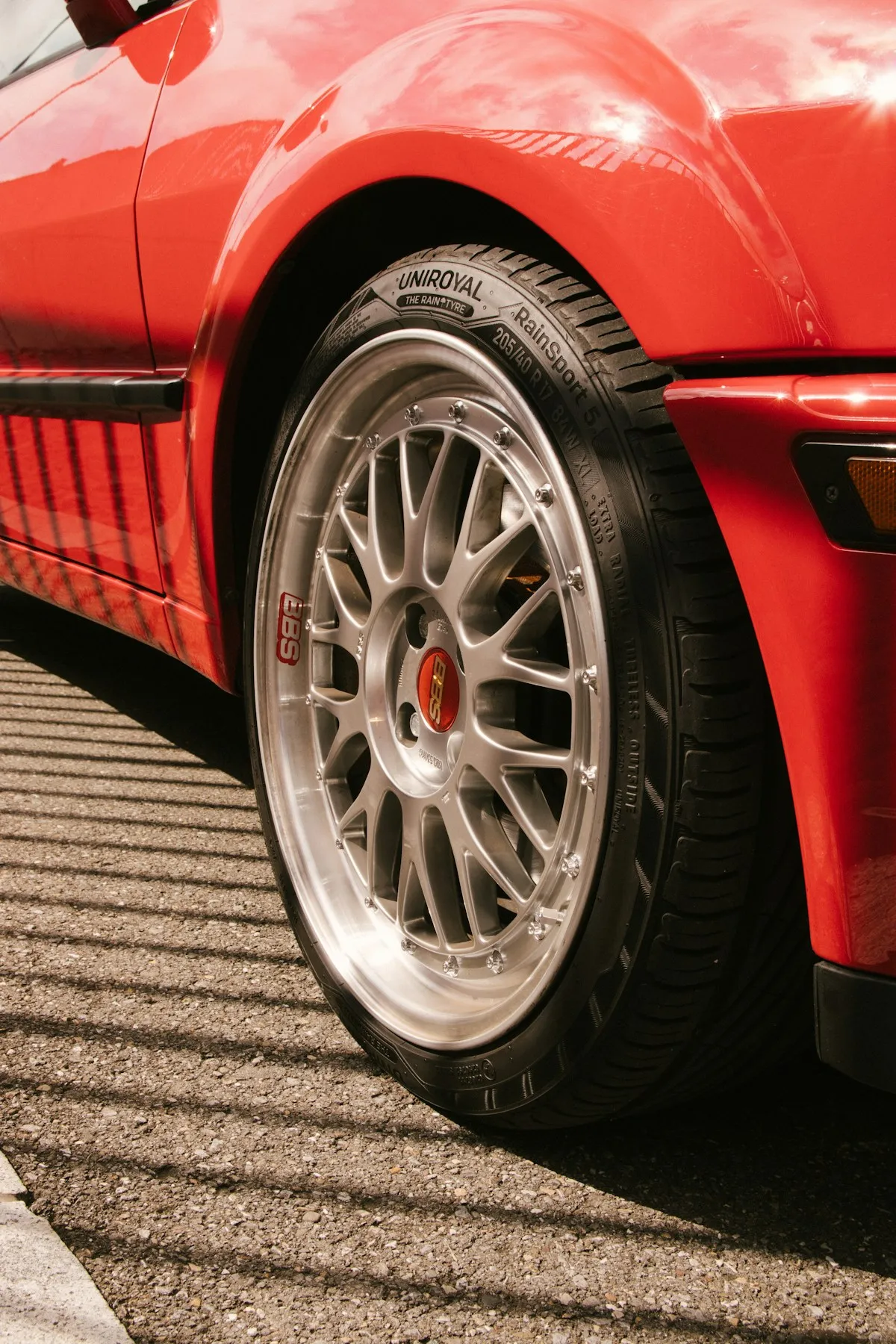
- Cars with difficult-to-clean wheel designs (multi-spoke, deeply-recessed, or with intricate surface details)
- Wheels with finishes prone to damage from aggressive cleaning (polished lips, chrome, gloss black)
Coating is less worth it for:
- Cars that already get cleaned frequently and where maintenance isn’t burdensome
- Track cars where brake dust generation exceeds what any coating can manage
- Wheels scheduled for replacement or refinishing in the next season
- Budget builds where the coating cost is a meaningful percentage of the wheel cost
Application on painted vs. raw finishes
Not all wheel finishes react equally to coatings. Painted wheels (most gloss-black, gloss-silver, color-matched painted wheels) are the typical use case and coatings work well. Clear-coated wheels behave similarly to painted wheels.
Polished aluminum and unpainted raw finishes can have coating compatibility issues. Some coatings discolor polished surfaces or reduce their reflectivity. Research compatibility specifically for your wheel finish before applying.
Forged wheels with special finishes (brushed, machined, anodized) often have manufacturer-specific guidance about coating compatibility. Check with the wheel manufacturer before applying coating to anything with a specialized finish.
Bottom line
Ceramic coating wheels is a meaningful quality-of-life upgrade for the right use case and a waste of time and money for the wrong one. For a daily-driven car with wheels that accumulate brake dust quickly, a coating applied with proper preparation pays back its time and cost through the season. For cars with easy-to-clean wheels or infrequent use, the benefit is smaller. Pick the right use case, do the preparation carefully, and the coating will deliver what it promises. Skip the prep or apply to the wrong situation and you’ll be replacing the coating prematurely and wondering why the marketing lied.