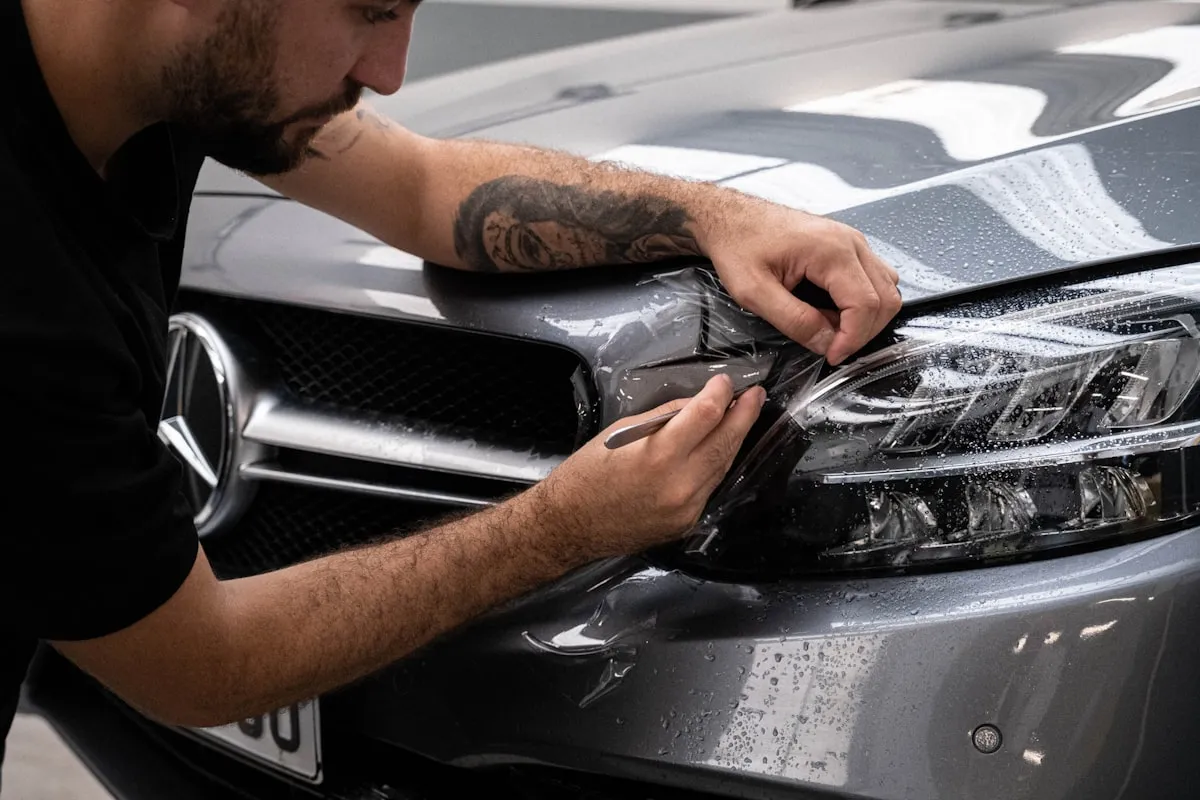
Choose paint protection film (PPF) if the goal is to protect the paint you already have, and vinyl wrap if the goal is to change how the car looks. PPF is a thick, clear, self-healing shield against rock chips and scratches. Wrap is a thinner colored film that transforms the finish and comes off later. They solve different problems — and on a serious build, plenty of owners use both.
Key takeaways
- PPF = preservation: chip and scratch protection, often self-healing, with 10-year warranties common.
- Vinyl wrap = transformation: new color or finish, reversible, far cheaper for a full color change.
- PPF is thicker (~6–8 mil) and pricier; wrap is thinner (~3–4 mil) and more affordable per panel.
- Both live or die on surface prep and installer skill.
- You can combine them — or use pigmented “color PPF” to get protection and a color change in one film.
PPF vs wrap at a glance
| Factor | Paint Protection Film | Vinyl Wrap |
|---|---|---|
| Primary purpose | Protect the finish | Change the look |
| Finish options | Mostly clear or satin | Gloss, satin, matte, chrome, color-shift |
| Impact/chip protection | Excellent | Minimal |
| Self-healing | Yes (quality films) | No |
| Typical lifespan | 5–10 years | 5–7 years |
| Reversibility | Yes, clean if in-life | Yes, with care |
| Full-car cost (typical) | $5,000–$8,000+ | $2,500–$6,000 |
What PPF does well
PPF is a thermoplastic urethane film, usually 6–8 mil thick, applied over the paint. It absorbs rock chips, road rash, and light scratches that would otherwise reach the finish. Quality films are self-healing — minor swirl marks disappear with heat from the sun or warm water. Most reputable films carry warranties around 10 years against yellowing and cracking.
It’s the obvious pick on high-impact areas (the leading edge of the hood, front bumper, mirrors, rocker panels) and on cars where the original paint matters for resale. PPF protects what’s there; it isn’t about reinventing the look (though satin PPF can knock a gloss car down to a matte sheen while still protecting it).
What vinyl wrap does well
Vinyl wrap is a thinner PVC film, roughly 3–4 mil, that exists to change appearance: a new color, a satin or matte texture, chrome, color-shift, or graphics and branding. A full wrap is dramatically cheaper than a quality respray for a comparable color change, and it’s reversible — peel it later and the original paint is underneath. It even shields the paint from UV and minor marring while it’s on, though it won’t stop a stone chip the way PPF will.
Wrap is the move when you want a different car visually, a temporary look, or fleet/business graphics.
Cost by coverage
| Coverage | PPF | Vinyl Wrap |
|---|---|---|
| Partial front (bumper, partial hood, mirrors) | $600–$1,200 | n/a (usually full panels) |
| Full front (full hood, fenders, bumper, mirrors) | $1,500–$2,500 | — |
| Full vehicle | $5,000–$8,000+ | $2,500–$6,000 |
Ranges vary widely by vehicle size, film brand, panel complexity, and shop. Get itemized quotes and ask which specific film line they’re installing.
Can you use both?
Yes, and it’s common on enthusiast cars:
- PPF on impact zones + wrap everywhere else for color plus protection where it counts.
- PPF over a wrap to protect the vinyl on high-wear edges.
- Color PPF (pigmented film): newer films combine a color or finish change with PPF-grade protection in a single layer — more expensive than wrap, but you get both jobs done at once.
The best-value setup for most daily drivers isn’t a full wrap or full PPF at all: partial PPF on the high-impact front end plus a ceramic coating over the rest of the car, typically $2,000–$4,000 total. You get real chip protection where stones actually hit, and the ceramic coating makes everything else easier to wash and more resistant to UV and stains — without paying to film the whole vehicle.
What both depend on: prep and the installer
Neither product can fix bad paint, and both punish rushed work. Clay, decontamination, and a flawless surface are non-negotiable — any trapped grit shows through. On wrap especially, failing or aftermarket-resprayed clear coat can lift during removal, so a wrap is safest over healthy factory paint. Vet the installer: ask for in-person examples, check edge wrapping and seams, and confirm the warranty in writing. A great film installed poorly looks worse than no film at all.
How to decide
- Choose PPF if you want to keep the original finish pristine, protect a new car, or guard high-impact areas for resale.
- Choose vinyl wrap if you want a new color or finish, a reversible change, or business graphics on a budget.
- Choose both (or color PPF) if you want a different look and real chip protection and the budget supports it.
If you’re weighing this against resale, remember PPF generally helps value while a loud wrap is a wash — more in our resale-safe mods guide.
Helpful references
Keep reading on Chariotz
- Get a Vinyl Wrap Instead of Painting Your Car
- 10 Custom Paint Job Ideas and How to Choose the Right Finish
- Daily-Driver Mods That Won’t Hurt Resale Value
- Wax, Sealant, or Ceramic Spray? Spring Paint Protection Explained
- Car Window Tinting Cost: Prices by Tint Type and Vehicle
- Customizing a Car on a Budget Without Wasting Money
- Explore more car customization guides