Spend enough time in the hobby and you’ll develop opinions about this debate. I’ve got a ’72 240Z on the rotisserie right now, and the question of NOS versus reproduction comes up every single week — sometimes multiple times a day. A friend swapped his original Datsun fuel sender for a repro unit, installed it, and watched the gauge read empty on a full tank. Another guy paid $400 for a NOS fuel sender on eBay and it works perfectly — but he could have bought a quality aftermarket unit for $85 that does the same job. The difference isn’t just money. It’s knowing which category each part falls into.
Key takeaways
- NOS parts are worth chasing for visible trim, emblems, gauges, and interior pieces where fit and finish are difficult to replicate
- Rubber components — seals, weatherstripping, grommets, hoses — are almost always better sourced as fresh reproductions, since old rubber has degraded regardless of storage conditions
- Safety-critical parts like brake hardware, wheel cylinders, and wheel studs should use modern reproductions with known metallurgy, not 50-year-old stock
- Evaluate reproduction quality by checking country of manufacture, reading marque-specific forum threads, and ordering from vendors with return policies
- Swap meets and marque-specific registries remain the best sources for genuine NOS trim and mechanical parts that haven’t yet hit eBay pricing
Why NOS isn’t automatically better
New Old Stock sounds simple: it’s unused factory parts, still in the original packaging. In practice, NOS is a spectrum. Some pieces have sat in perfect climate-controlled storage since 1969. Others have been on a shelf in a damp garage in rural Tennessee for decades, technically “unused” but compromised by moisture, oxidation, or UV exposure. The box being original doesn’t tell you much about the part inside.
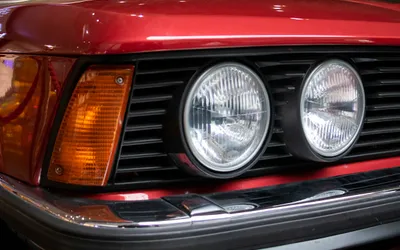
The categories where NOS genuinely earns its premium are those where original tooling and materials are either no longer replicated correctly or where originality matters for a judged show. Chrome trim clips that reproductions get wrong by a millimeter, causing visible panel gaps. Instrument cluster faces where repro printing doesn’t match the original typeface. Factory emblems where the chrome depth and color are noticeably different on reproductions. For my Z, the combination gauges are a sore point — the repros I’ve seen have the wrong font on the tach and the needle sweep is slightly off. A correct NOS cluster is worth hunting down if you’re building a show car.
The same logic applies to glass. Tinted OEM glass has a specific hue that modern reproductions frequently miss, and on a concours build that matters. Original Autolite or Delco stamped hardware on a Camaro or Mustang can be the difference between a first-place trophy and a second. For those builds, NOS makes sense at almost any price.
Where reproduction wins
Rubber is the clearest case. A NOS door seal from 1972 is a 54-year-old piece of rubber that has been sitting in a bag. It may look fine on the outside and crumble or take a permanent set the first winter it faces temperature swings. Modern reproductions use current-compound EPDM rubber that will outperform aged NOS every time. Weatherstripping, trunk seals, window seals, door bumpers, grommets — buy fresh repros and don’t look back.
Brake components fall into a different category: this is a safety argument, not an age one. The metallurgy in 50-year-old wheel cylinders, master cylinders, and brake hardware is an unknown. Remanufactured and reproduction brake parts are manufactured to modern specs with traceable materials. Sleeved originals from a reputable rebuilder are fine; unmodified NOS brake hardware from a swap meet is a risk I won’t take on a car I drive.
Mechanical wear items — timing chain sets, water pumps, fuel pumps — are also reproduction territory. The originals wore out once; a quality reproduction with modern tolerances will serve better. For the Z, I run a rebuilt SU carb set with new jets and needles rather than hunting NOS carburetors that may have dried-out bowl gaskets and corroded jets.
How to evaluate reproduction quality
The variance in reproduction quality is enormous. A reproduction door handle escutcheon from one vendor fits perfectly; the same part from another vendor requires filing and shimming to close without rattling. The research is non-negotiable.
Start with the marque-specific forums. ClassicZcar.com for S30 Datsuns, Team Camaro, The HAMB, Ford Barn — every marque has a community where people have already bought and tested the parts you need. Search the vendor name alongside the part description and read the negative reviews carefully. A vendor that shows up repeatedly in “just don’t” threads is telling you something.
Country of manufacture matters on trim and interior pieces. Taiwan-sourced reproductions for classic American muscle have improved dramatically; some are genuinely excellent. For Japanese classic parts, the calculus is different — the Japanese aftermarket community sources some very accurate reproductions through vendors like Motorsport Auto and Rock Auto’s OEM-equivalent listings. When in doubt, buy from a vendor with a no-hassle return policy and test-fit before committing to paint or upholstery work.
Finding NOS without paying eBay prices
eBay has effectively set a floor on NOS pricing because sellers know what they have. But eBay isn’t the only game in town. Swap meets — particularly marque-specific national meets like the Z Car Show’s national event or Camaro Nationals — still produce parts that haven’t been priced against internet comparables. Older vendors at these events price from memory and habit, not from a phone search. I’ve found NOS 240Z door handles at a swap meet for $40 that eBay would have listed for $180.
Marque registries and owner clubs often maintain parts networks outside the open market. The Datsun/Nissan community has a tight network of parts brokers who’ve been accumulating inventory since the 1980s. Introduce yourself on the forum before you need something urgent — relationships built over months of participation pay off when a member sells their parts stash privately before it ever hits a public listing.
Don’t overlook estate sales and shop auctions. Dealerships that serviced specific brands in the 1960s and 70s sometimes had parts rooms that were never fully liquidated. These still surface periodically, and the prices are almost always below market because the seller doesn’t know what they have.
The cost math
Before paying the NOS premium, do the comparison honestly. If a NOS emblem costs $120 and the best-reviewed reproduction runs $35, ask what the repro actually gets wrong. If the answer is “nothing visible without a magnifying glass,” save the $85 and spend it on something that actually matters. If the answer is “the chrome is obviously thinner and the casting lines don’t match,” the NOS is worth considering.
The Z restoration has taught me to allocate NOS budget toward the things that make the car look and feel right, and reproduction budget toward the things that make it run right and stay sealed. That split doesn’t apply universally, but it’s a reasonable starting point when you’re staring at a spreadsheet trying to figure out where the money should go.
Bottom line
There’s no universal answer to NOS versus reproduction — the right choice is part-specific, build-goal-specific, and budget-specific. Trim pieces, gauges, and visible interior components are where correct originals earn their premium. Rubber, safety components, and mechanical wear items are where modern reproductions are the smarter call. Do the forum research before you buy either, and never let nostalgia for the original packaging override your judgment about the part itself.