Amelia Island has become the best leading indicator for the rest of the auction year. The cars crossing the block in early March tell you what collectors are willing to stretch for after the winter reset, and what the summer houses — Monterey, Quail, RM Sotheby’s at Pebble — will be building their catalogues around. Amelia 2026 told a specific story: the top end is still strong but selective, the middle is broadening, and modern-era enthusiast cars are continuing to pull money that used to chase older machinery.
Key takeaways
- Pre-war concours-grade cars held values at or above estimates, but the depth of bidding has narrowed
- 1960s American muscle continues to soften at the broad level — only exceptional documented examples cleared high estimates
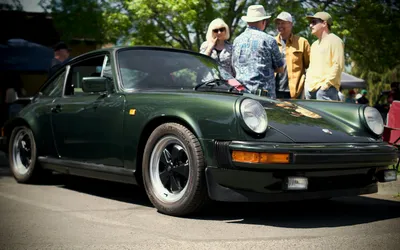
- Modern-era enthusiast cars (air-cooled Porsches, manual-transmission supercars, low-mile examples of the 1990s–2000s) continued to outperform
- Restomods and high-quality restorations are now bringing numbers that compete with stock examples for all but the rarest cars
- Import JDM and 1990s European sports cars attracted more bidders than space in the catalogue suggested they would
The top end is selective, not soft
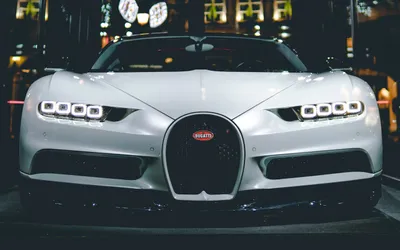
Major pre-war cars — coachbuilt pre-WWII Bugattis, Alfa 8Cs, Duesenberg Model Js — held their values. The cars that met or exceeded estimates this year were almost universally cars with impeccable provenance, concours-level restorations or original preservations, and clear ownership trails. The cars that stumbled were borderline examples — questionable restorations, uncertain history, or condition issues that the catalogue photos obscured.
This is a shift from five years ago, when almost any pre-war car with a name would pull a full estimate regardless of condition. The remaining buyer pool is smaller and better-informed. Collectors who can afford these cars are now cross-checking provenance, insisting on third-party inspections before the sale, and walking away from cars that have gaps in their story.
The takeaway for anyone watching this segment: the cream of the top is still liquid. The next tier down is harder to move than it was, and this is now a market where catalog listings matter as much as condition.
American muscle needs a compelling story
Broad-market 1960s American muscle — ’69 Camaro SS, ’70 Chevelle SS, Mustang Fastback, standard Road Runners — continued the soft trend that started in 2023. These cars still sell, but the numbers are down 15–25% from the 2021 peaks, and the auction sheets show a lot of no-sales in the mid-estimate range.
What still brings strong money in this segment: numbers-matching cars with documented history, COPO and low-production options, and cars from verified original-ownership chains. A ’69 Z/28 with a paper trail back to dealer delivery will still clear a strong price. A high-quality restomod version of the same car, honestly enough, may also clear a strong price — and that’s the other thread worth watching.
Restomods are in the mainstream
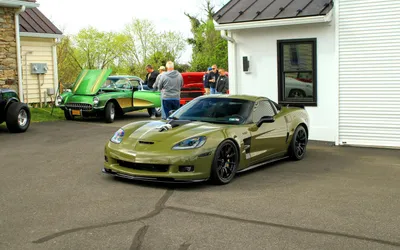
The restomod segment at Amelia 2026 was bigger than it’s ever been, and the prices were stronger than the catalog estimates in several cases. A Roadster Shop or Pro Touring build of a C2 Corvette or first-gen Bronco is now pulling numbers that compete with unmolested stock examples — and in some cases, exceeding them. This isn’t a curiosity anymore; it’s a market.
The buyer demographic is different from traditional restoration collectors. Restomod buyers tend to be younger, more interested in driving the car than displaying it, and less concerned with originality. They’ll pay for a car that goes, stops, and steers like something from the last decade while looking like something from the ’60s. The shops doing this work at the high end have multi-year waiting lists, which supports the secondary market for already-built examples.
Modern enthusiast cars keep rising
The biggest structural shift in the hobby over the last five years continues: buyers who grew up on air-cooled Porsches, E46 M3s, 993 Turbos, NSXs, Integra Type Rs, R34 GT-Rs, and manual-transmission supercars are now the primary bidders on those cars. Amelia 2026 reflected that. Low-mile manual 911s from the 2000s brought strong numbers. A clean E46 M3 in the right spec cleared estimates. A manual-only Ferrari from the late ’90s crossed the block at a number that would have seemed impossible three years ago.
The pattern: cars that were attainable to someone starting their career in 1998 are now aspirational for the buyers who remember them from that era. That demographic has money now, and it’s spending on cars it actually wanted in its twenties.
JDM and 1990s European
Japanese performance from the 1990s — R32/R33/R34 Skylines, Supra MkIVs, RX-7 FD, Integra Type R — attracted bidder depth that outpaced the catalog’s treatment of the segment. Several cars went for 20–40% above high estimate. Some of this is legitimate appreciation; some of it is auction-room enthusiasm that may not sustain in private transactions. Either way, the message is consistent: this category has more buyers than the houses currently allocate space for.
European cars from the same era — M Coupe, Mercedes 500E, Integrale Evo, various Alpines and Alpina builds — showed similar depth. The overall trend is that 1990s performance is now collectible across geographies, and auction catalogues next year will probably reflect that.
What it signals for Monterey
The houses with Monterey catalogues in preparation are reading the same data I am. Expect more modern-era enthusiast cars in the main-stage catalogues, continued aggressive marketing on restomods, and a quieter but still-present top end of pre-war offerings. American muscle will still appear but in smaller numbers, and the houses will be more selective about which specific cars they promote as headliners.
For buyers planning on Monterey: the cars that are going to clear high estimates will be specific examples with specific stories. Walk the auction preview with eyes open, talk to the consignment teams, and don’t assume that catalog position equals desirability in 2026. Some of the best values at Amelia this year came from the middle of the catalogue.
Bottom line
Amelia 2026 wasn’t a market reset — it was a continuation of trends that have been building for five years. Top-tier provenance wins. Stories matter more than specs. Modern enthusiast cars are now in the center of the market, not the margins. And the buyer pool for broad-market ’60s muscle keeps shrinking. Summer auction season will probably reinforce all of that, and the houses that position their catalogues accordingly will outperform.