
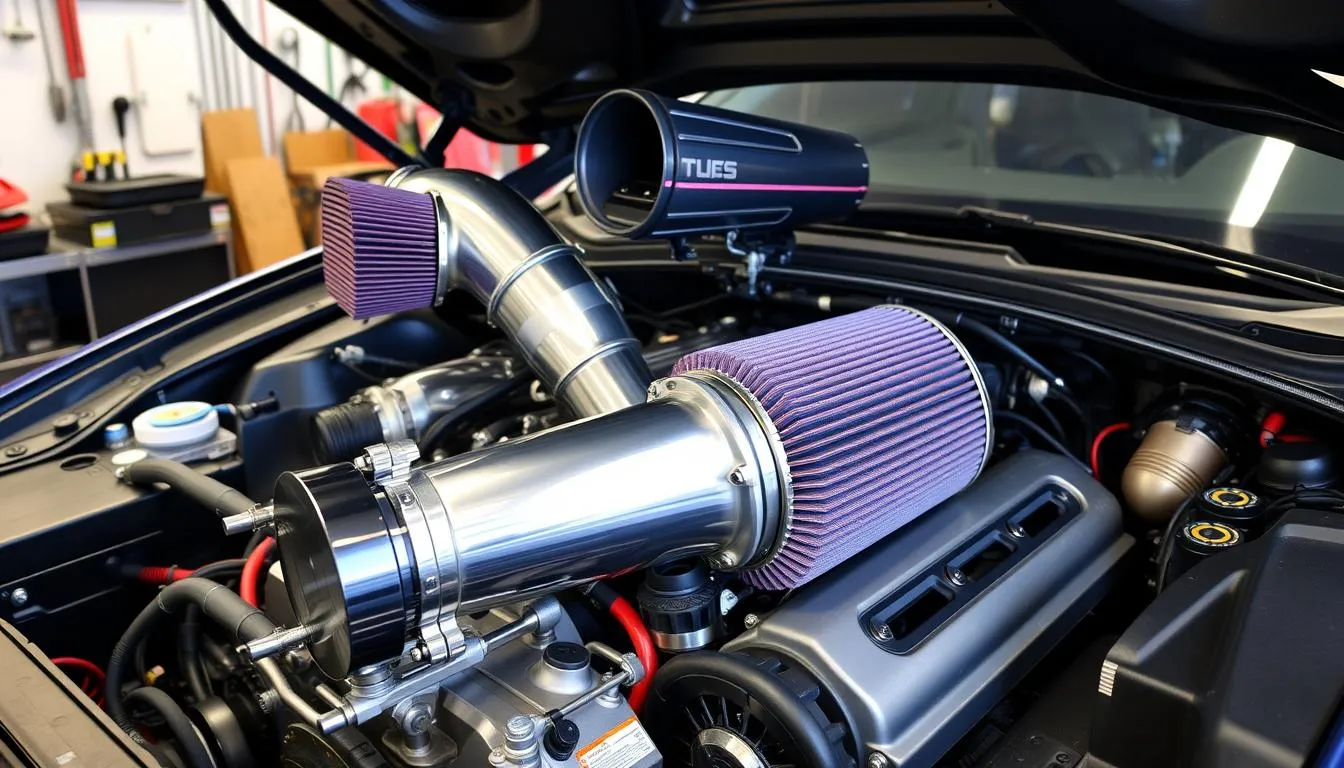
A cold air intake can make the engine sound more pronounced and may add power when the factory intake is a meaningful restriction. It does not guarantee a universal horsepower or fuel-economy gain. The result depends on the exact engine, intake design, calibration, test conditions, and whether the rest of the airflow path is already near its limit.
The safest buying rule is simple: choose a kit listed for your exact year, make, model, engine, and emissions family; read its fitment and legal documentation; and look for repeatable before-and-after test data from the same vehicle.
Key takeaways
- There is no defensible generic “5–20 horsepower” promise for every cold air intake.
- A louder intake note can make a car feel more responsive even when measured acceleration barely changes.
- A dyno chart is useful only when the stock and modified tests use the same vehicle, fuel, correction method, and comparable temperature and heat-soak conditions.
- An intake must preserve required sensors and emissions controls. A part that changes emissions-related operation needs appropriate compliance documentation.
- Aftermarket parts do not automatically erase an entire vehicle warranty, but damage caused by a defective part or incorrect installation may not be covered.
How we evaluated cold air intakes
This article was updated August 11, 2026 using current EPA tampering policy, California Air Resources Board aftermarket-part guidance, and FTC warranty guidance. We did not install or dyno-test a specific kit for this article, so we do not publish a Chariotz horsepower number.
We consider an intake claim credible when it identifies the exact vehicle and engine, shows stock and modified runs on the same test setup, explains whether the hood was open or closed, states fuel and calibration changes, and provides repeat runs rather than one best pull. Manufacturer testing is still a product claim; independent testing on the same fitment is a useful second check.
What a cold air intake changes
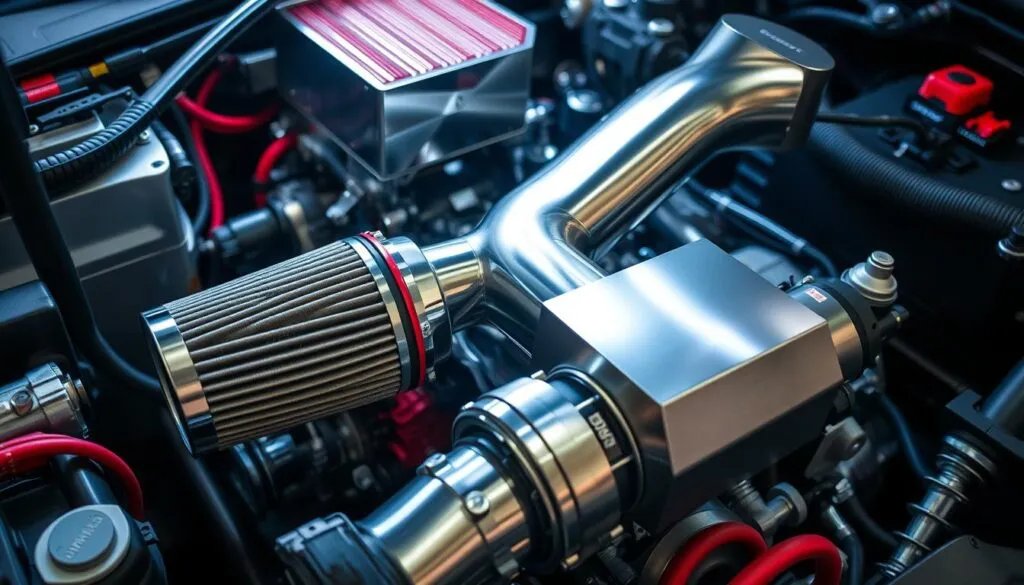
The factory intake routes filtered air to the throttle body or turbocharger inlet while controlling noise, water exposure, sensor placement, emissions behavior, and packaging. An aftermarket system may change:
- filter area and restriction
- tube diameter, bends, and internal surface
- where the filter draws air
- shielding from engine-bay heat
- mass-airflow or other sensor placement
- intake sound under load
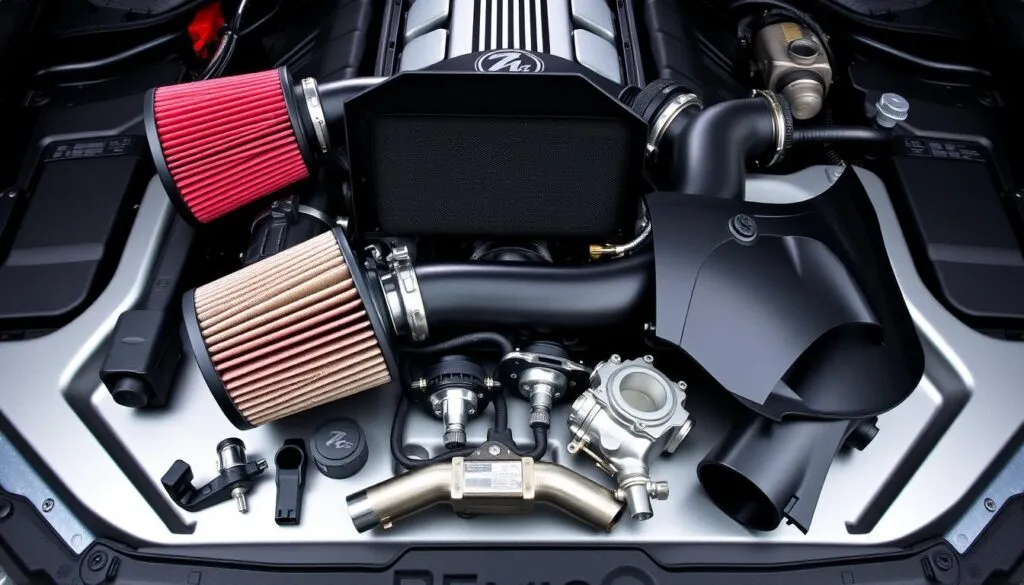
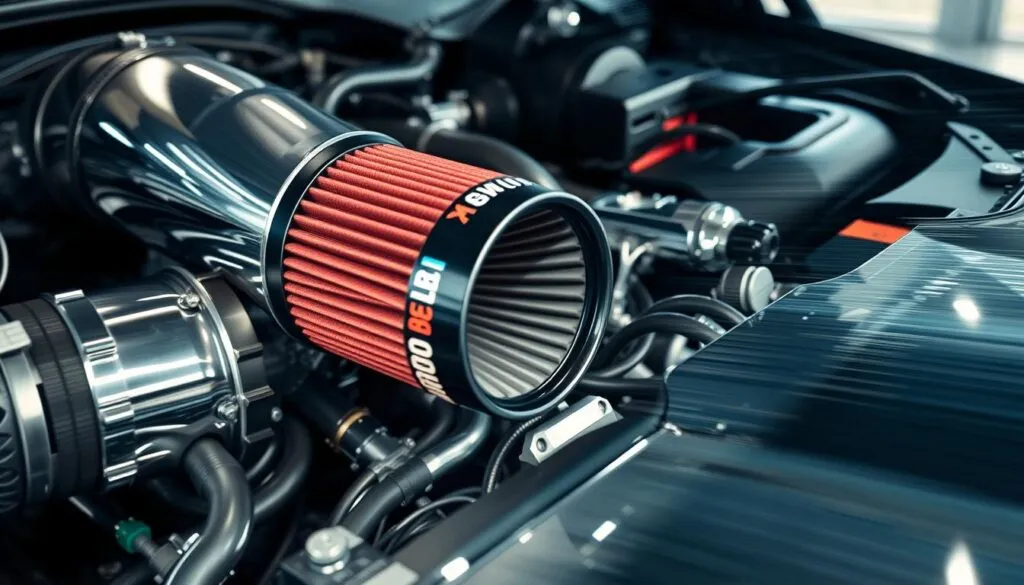
A “short ram” intake usually keeps the filter in the engine bay and shortens the path. A true cold-air design places the inlet where it can draw cooler outside air, but placement can increase exposure to water and road debris. The name on the box matters less than measured inlet temperature, pressure drop, filtration, and correct sensor behavior.
How much power should you expect?
Treat power as fitment-specific. A naturally aspirated engine with a restrictive stock airbox may respond differently from a turbocharged engine whose factory intake already supports the stock calibration. Some vehicles need a compatible tune to use additional airflow correctly; others should retain the stock calibration.
Before accepting a dyno claim, check:
- Was the same vehicle tested before and after?
- Were fuel, tire pressure, gear, dyno type, and correction factor held constant?
- Were several runs shown, not just the best stock pull and best modified pull?
- Were coolant, oil, and intake-air temperatures comparable?
- Did the test include a tune, exhaust, fuel change, or other modification?
- Is the gain across a useful RPM range, or only at one peak point?
If a seller cannot answer those questions, buy the intake for sound and serviceability—not for the advertised power number.
Will it improve fuel economy?
Do not budget around an MPG increase. Modern engine controls meter fuel to match airflow and load, while driving style, traffic, weather, tires, and speed can easily obscure a small change. A louder induction note can also encourage more throttle, wiping out any theoretical benefit.
To measure your own result, compare several full tanks before and after on the same route and fuel, using miles divided by gallons at the pump. The dashboard estimate alone is not a controlled test.
Fitment and installation checks
Use the part maker’s application list, not a photo that “looks close.” Confirm:
- model year, engine code, drivetrain, and emissions family
- sensor type and mounting orientation
- clearance from belts, fans, wiring, and hot exhaust parts
- crankcase ventilation and vacuum connections
- filter location and water-exposure warnings
- whether the kit requires or prohibits an ECU calibration
- included heat shielding and mounting hardware
After installation, check for loose clamps, unmetered-air leaks, warning lights, unstable idle, rubbing, and wiring tension. If the malfunction indicator light comes on, diagnose the fault rather than clearing it and continuing to drive.
Follow the intake maker’s filter service interval and method. Oiled and dry filters have different procedures; excess oil or the wrong cleaner can create problems. There is no one mileage interval that applies to every filter or driving environment.
Emissions legality and warranty
The EPA Tampering Policy explains the federal prohibition on parts or calibrations that bypass, defeat, or render emissions-related elements inoperative. For a street vehicle, avoid any kit or tune marketed around disabling diagnostic codes, sensors, catalysts, or other required controls.
California uses Executive Orders for qualifying aftermarket parts. CARB explains that an EO applies to specific vehicles and configurations. Search the CARB aftermarket-parts database and match the EO number, part number, model year, and engine—not just the brand.
Warranty claims also need nuance. FTC consumer guidance says using an aftermarket part does not automatically cancel the whole warranty. A manufacturer or dealer may deny coverage for damage it can show was caused by a defective aftermarket part or improper installation. Save the part documentation, receipt, installation record, and original components.
Is a cold air intake worth it?
| Your goal | Best next step |
|---|---|
| More intake sound | A fit-specific, enclosed or well-shielded intake can be a reasonable choice |
| Proven acceleration improvement | Start with baseline acceleration or dyno data, then buy only against credible fit-specific testing |
| Better fuel economy | Maintenance, tire pressure, speed, and trip patterns are more dependable levers |
| Track consistency | Measure inlet temperatures and repeat performance after heat soak |
| Street legality | Verify federal compliance claims and any required state EO before purchase |
| Lowest risk on a warranted car | Keep the stock system or use a documented, reversible kit installed correctly |
Bottom line
A cold air intake is best treated as a sound-and-airflow modification whose measurable performance depends on the vehicle. The right kit fits correctly, keeps sensors and emissions systems working, has transparent test data, and does not rely on a universal horsepower or MPG promise.
If power is the goal, establish a baseline first and change one variable at a time. If the goal is simply a stronger induction sound, say that plainly and choose the kit on fit, filtration, heat management, legal documentation, and warranty.
Primary sources
- EPA: vehicle and engine tampering policy
- California Air Resources Board: aftermarket parts and Executive Orders
- CARB aftermarket-parts database
- FTC: auto warranties and aftermarket parts