
The best acceleration modification depends on what is limiting the car now. If the tires spin, add usable grip before power. If the engine is detuned and mechanically healthy, a compliant ECU calibration may help. If the car already launches cleanly but lacks power at speed, gearing, weight, airflow, or forced induction may matter more.
A pedal-response controller is not the same as a power modification. It can make a given pedal movement request more throttle, which feels sharper, but it does not create horsepower by itself.
Key takeaways
- Record a repeatable baseline before buying parts.
- Tires can improve acceleration only when available grip is the limit; the correct size, load rating, pressure, temperature range, and alignment still matter.
- ECU tunes and engine hardware must remain emissions compliant on street vehicles.
- Shorter gearing can multiply wheel torque but raises engine speed and can reduce top speed in a gear.
- Removing weight helps only when it is done safely; do not remove crash protection, restraints, required equipment, or street-legal systems.
- Forced induction can deliver the largest change and also creates the largest heat, fuel, drivetrain, calibration, and reliability burden.
How we evaluate acceleration gains
This article was updated August 11, 2026 using NHTSA tire guidance, U.S. Department of Energy vehicle-mass principles, current EPA tampering policy, CARB aftermarket-parts guidance, and FTC warranty guidance. It is a decision framework, not a test of one vehicle or product.
Use the same closed course or drag strip, driver, fuel, tire pressure, vehicle load, launch method, and weather range before and after a change. Record several runs in both directions when the venue permits, then compare the median rather than the single quickest time. For power claims, compare repeat dyno runs with the same dyno type, gear, correction factor, and similar fluid and intake-air temperatures.
Public-road acceleration testing puts other people at risk and introduces traffic, grade, and enforcement variables. Use a track or other controlled venue.
1. Fix traction and tire condition first
Acceleration cannot improve if added wheel torque only creates wheelspin or triggers traction control. Inspect tread, age, damage, pressure, alignment, and the tire’s intended temperature range before changing power.
NHTSA’s TireWise guidance explains that tire design affects wet and dry traction, handling, durability, ride, and rolling resistance. Its federal UTQG traction grade measures straight-line wet braking on a specified surface; it is not a launch-grip or dry-cornering score. Use instrumented tests for the exact tire and fitment rather than treating the sidewall grade as an acceleration ranking.
Changing wheel or tire size can alter gearing, speedometer accuracy, clearance, load capacity, and unsprung mass. Stay within vehicle and tire-maker fitment requirements.
2. Use a fit-specific ECU calibration
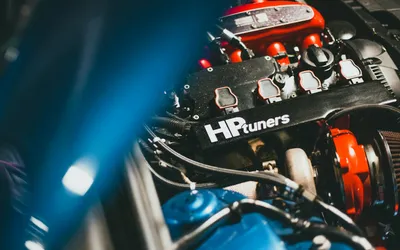
An ECU calibration can change boost, ignition timing, fueling, torque limits, throttle mapping, and transmission behavior. The potential gain depends on the engine and fuel. A turbocharged engine with conservative factory boost may have more calibration headroom than a naturally aspirated engine already operating near its airflow limit.
Ask the tuner for:
- the exact supported engine, transmission, hardware, and model year
- required fuel grade and operating conditions
- repeat before-and-after data on the same setup
- knock, air-fuel, temperature, and boost safeguards
- emissions-compliance documentation for street use
- a recovery plan if an update or fault interrupts programming
Avoid calibrations that disable diagnostic trouble codes, catalysts, oxygen sensors, exhaust-gas recirculation, particulate filters, or other required emissions functions. The EPA Tampering Policy covers engine calibrations as well as physical defeat devices.
3. Change final-drive gearing
A numerically higher final-drive ratio multiplies torque at the wheels more in a given gear. That can improve low-speed acceleration without adding engine power.
The trade-offs are real: higher engine speed at cruise, more shifts during an acceleration run, possible speedometer or control-system calibration changes, and a lower road speed at redline in each gear. A gear change also requires correct setup of the differential and compatible components. Model the new road speed per gear before buying parts and use an experienced driveline installer.
4. Reduce mass without removing safety
Less mass takes less energy to accelerate. The U.S. Department of Energy notes that reducing vehicle weight reduces the energy required for acceleration.
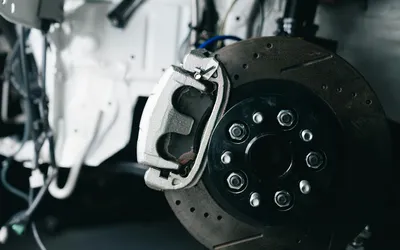
Start with removable cargo and unnecessarily heavy add-ons. Lightweight wheels may also reduce rotating and unsprung mass, but only when the replacement preserves load rating, fitment, brake clearance, and durability. Lightweight seats, batteries, flywheels, driveshafts, and brake components require more vehicle-specific analysis.
Do not remove airbags, seat belts, crash structures, lighting, emissions hardware, or other required safety equipment from a street car. A stripped track car belongs on a track and should be engineered for that use.
5. Remove a proven airflow restriction
An intake, exhaust, intercooler, or related airflow part helps acceleration only when the original system is a meaningful restriction and the engine calibration can use the change. A louder engine is not proof of more power.
Look for same-vehicle before-and-after data and check whether the advertised result included a tune, different fuel, or other hardware. Our cold air intake guide explains how to read dyno claims and verify emissions fitment.
Street hardware still needs to preserve required emissions systems. In California, match the part and vehicle to the CARB aftermarket-parts Executive Order database when an exemption is required.
6. Add forced induction only with a complete plan
A turbocharger or supercharger can increase the mass of air entering the engine and support a much larger power change than a simple bolt-on. It is also a system project, not just a compressor purchase.
The plan may need fuel-system capacity, charge-air cooling, engine management, knock control, cooling, exhaust flow, clutch or transmission capacity, differential and axle capacity, brakes, tires, and emissions compliance. The safe power limit depends on the engine, drivetrain, fuel, thermal management, and calibration—not an internet percentage.
For a daily driver, price the complete installed and validated system plus maintenance and contingency repairs. A lower-power package with conservative temperatures and torque may be quicker over repeated runs than a peak-number build that heat-soaks or overwhelms the tires.
What about throttle controllers and aerodynamics?
A throttle controller changes the relationship between pedal position and requested throttle. Pressing the stock pedal farther can usually request the same opening, so the controller may improve perceived response without changing a measured full-throttle acceleration time. Test it with the same launch and full-throttle method before calling it a performance gain.
Aerodynamic drag matters more as speed rises. Removing an unused roof rack can reduce drag and noise, and the EPA identifies reduced drag as a fuel-economy benefit at higher speeds. Lowering a street car is not automatically an aerodynamic improvement; it also changes suspension travel, alignment, bump-steer, clearance, and headlight aim. Use vehicle-specific aero data rather than appearance as evidence.
Legal, warranty, and safety checks
- Verify emissions legality before installing an engine or calibration change.
- Check state noise, inspection, equipment, and registration rules.
- Keep receipts, calibration files, test results, and original parts.
- Recheck tires, brakes, fluids, mounts, and fasteners after a performance change.
- Tell the insurer about modifications when the policy requires disclosure.
FTC guidance says an aftermarket part does not automatically cancel the entire vehicle warranty. Coverage can be denied for damage the manufacturer or dealer can show was caused by a defective part or improper installation.
Bottom line
Start with a safe baseline, identify whether the car is traction-, power-, gearing-, or mass-limited, and change one variable at a time. Tires and maintenance are the first step for many street cars. A fit-specific tune or gearing can produce a clearer measured gain on the right platform. Forced induction belongs at the end of a complete engineering and budget plan.
If a product promises quicker acceleration but provides no repeatable same-vehicle data, treat the claim as marketing until your own controlled test proves otherwise.
Primary sources
- NHTSA TireWise: tire selection, ratings, pressure, and safety
- U.S. Department of Energy: lightweight vehicle materials
- EPA: vehicle and engine tampering policy
- CARB: aftermarket-parts Executive Order database
- FTC: auto warranties and aftermarket parts