Summer tire buying in 2026 is getting harder to simplify. The top tier — Michelin Pilot Sport, Continental ExtremeContact Sport, Bridgestone Potenza Sport, Goodyear Eagle F1 — used to justify its premium over the mid-tier with obvious performance gaps. That gap has shrunk. The mid-tier tires from the same brands and from some of the Asian manufacturers have gotten genuinely good. Which means the question “is the premium worth it” now has a more interesting answer than it did five years ago.
Key takeaways
- Ultra-high-performance summer tires still deliver clear wet-braking and track-session advantages that mid-tier tires don’t match
- For daily drivers that rarely see more than seven-tenths, a high-quality mid-tier summer tire is often the smarter purchase
- Tread life on the premium summer tires has not improved meaningfully — if you want 40,000 miles, you’re not in the summer tire market
- Sizing availability matters as much as the tire spec — a theoretically better tire that isn’t stocked in your size is worse than a good tire that is
- Date codes still matter; tires from high-volume warehouses move fast, but slow-selling sizes can sit
Where the premium is still buying something
The Pilot Sport, ExtremeContact Sport, Potenza Sport, and Eagle F1 platforms separate themselves most clearly in two situations: hard wet braking, and sustained high-load cornering. The difference isn’t subtle when you need it. A panic stop from 60 mph in rain can be three to five feet shorter on a top-tier summer tire versus a mid-tier. That’s the difference between hitting the car in front and stopping a foot short.
Track and autocross use is where the gap is widest. Heat cycle resistance, sidewall behavior under sustained lateral load, and compound consistency across multiple hot laps are things premium summer tires genuinely do better. If you do trackdays, even occasionally, the premium is not wasted.
What the premium does not buy: better tread life, better ride comfort, or better winter behavior. Summer tires are summer tires — they all get miserable below 40°F.
Where mid-tier has closed the gap
Continental ExtremeContact Sport is priced below the ultra-high-performance tier from the same maker and for most daily-driven performance cars it’s within 2–3% of the top tier in dry grip and within 5% in wet. If you’re weighing it directly against Michelin’s flagship, our Pilot Sport 5 vs. ExtremeContact Sport 02 comparison breaks down where each one wins on wet braking, dry grip, and tread life. For a car that sees a few spirited drives a month and commuting the rest of the time, the math is obvious.
Firestone Firehawk Indy 500, Hankook Ventus V12 evo2, and the Yokohama Advan line have all put out products that compete seriously with the traditional premium brands at meaningfully lower price points. Tread life is similar (still short by all-season standards), wet grip is close enough, and the dry-performance envelope is adequate for street and occasional track use.
Where the mid-tier is less competitive: wet-weather emergency situations, very high-load sustained events, and ultimate limit behavior. If you’re driving at eight-tenths or above, the top tier separates. If you’re driving at six-tenths, the difference is minimal.
Tread life expectations
This is the least-discussed aspect of summer tire buying and the one that surprises people most. Performance summer tires are soft compounds by design. A well-driven car on Pilot Sports will see 20,000–28,000 miles. A car driven more aggressively or with stock alignment will see less. Cars with aggressive negative camber eat the inside shoulder and can wear a set out in under 15,000 miles if alignment isn’t adjusted.
If you want 40,000-plus miles out of a performance tire, you’re in the max-performance all-season category, not summer. The Michelin Pilot Sport All Season, Continental ExtremeContact DWS 06 Plus, and similar products trade some dry grip and track behavior for tread life that’s roughly double. For most owners, that tradeoff makes sense.
Size availability and inventory
The best tire you can’t buy in your size is worse than the second-best tire that’s in stock. This sounds obvious and yet it catches people every spring. Popular sizes in the 18–19-inch range are generally well-stocked across all the major tires. Less common sizes — 255/35R20, 275/30R19, and the odd fitments for newer performance cars — can be harder to find.
Check Tire Rack, Discount Tire, and Amazon’s tire inventory for your specific size before you settle on a tire model. If the top option is backordered for six weeks, the second option that’s in the warehouse today is probably the smarter choice.
Date codes on slow-moving sizes
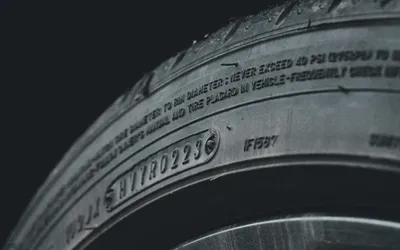
Tires have a four-digit date code on the sidewall — the week and year of manufacture. Tires more than about five years old start to degrade regardless of mileage. High-volume sizes turn inventory fast and you’ll rarely see a date code more than a year old from a reputable retailer. Less common sizes can sit.
When you’re shopping less common sizes, ask for the date code before you commit. A 2022-manufactured tire being sold in 2026 is borderline. A 2020-manufactured tire is too old — the rubber has started to oxidize even if the tread is full.
Bottom line
The question “is the premium worth it” in 2026 has three answers depending on how you drive. For track-oriented use, yes — Pilot Sport, ExtremeContact Sport, or equivalent. For spirited street driving, the top of the mid-tier is excellent and saves meaningful money. For daily use with occasional fun, a max-performance all-season gives up very little in real-world driving and doubles the tread life. The worst move is to buy the cheapest summer tire in a premium size and pretend it’s equivalent to the better options — it’s not, and you’ll figure that out during the first hard rain.