
Every tuner shop sees the same pattern in July. A car that ran fine through spring starts running hot in traffic. Customer brings it in, the technician scans for fault codes, finds nothing, pulls the radiator cap, finds a cooling system that’s either low, contaminated, or both. The root cause was almost always visible in April — a borderline hose, a weak water pump, a thermostat that was opening late. April is diagnostic season. July is failure season. The work you do now is the difference between a summer of driving and a summer of diagnostics.
Key takeaways
- Coolant condition and system pressure test are the two most informative checks you can do in under an hour
- Hose failures are usually visible as swelling, softness, or surface cracking before they rupture — inspect all of them, not just the big ones
- Water pumps on high-mileage vehicles are the single most common failure point in summer — weep holes and bearing play are the tells
- Thermostats that are opening late cause creeping temperatures that owners often don’t notice until ambient heat compounds the problem
- For modified or boosted engines, cooling capacity upgrades are cheap insurance and should be planned around expected use
Start with the coolant
Spring cooling system inspection begins before any tools come out. What color is the coolant in the reservoir? What does it smell like through the filler cap? Is the level at the correct mark? Any of those answers being off is a starting point for deeper inspection.
Coolant that has turned brown, rust-colored, or has visible sediment is telling you about internal corrosion. Factory-fill coolants are formulated with corrosion inhibitors that deplete over time. When the inhibitors are exhausted, the system starts rusting from the inside — cast iron engine blocks, steel cooling passages in aluminum heads, and the radiator’s internal tubes all start contributing particulate to the system. A flush and fresh coolant is the minimum response; in severe cases, the problem has moved beyond what a flush can address.
Coolant that smells burnt or oily suggests either head gasket contamination or internal ATF contamination from a failing trans cooler. Either one warrants immediate attention before any summer driving.
System pressure test
A pressure test on the cooling system finds leaks that are too small to show as puddles on the garage floor. You pressurize the system to the rated pressure (usually 15–20 psi depending on the cap specification) and watch for pressure drop over 10 minutes. A healthy system holds pressure indefinitely. A system that drops pressure measurably within 10 minutes has a leak somewhere.
The test tool is $50–$100 to own and useful for years. Most auto parts stores loan one as part of their tool loan programs if you don’t want to buy.
Where leaks come from: hose ends (clamps loosening as hoses age), water pump weep hole, heater core connections, radiator tank-to-core seams (on plastic tank radiators), and head gasket interfaces. A pressure test that reveals a leak tells you where to look next.
Hose inspection
Cooling hoses fail in three stages before they rupture. Stage one is gradual hardening — the hose loses flexibility compared to when it was new. Stage two is external surface cracking, visible as small fissures in the rubber, particularly at the clamp locations where the rubber is bent over a fitting. Stage three is the failure itself — a rupture, a pinhole leak, or a catastrophic blow-out.
The visible stages give you warning. Squeeze every cooling hose in the system by hand. A hose in good condition is firm but pliable — it returns to its original shape immediately when released. A hose that feels soft, spongy, or that stays deformed is past its service life. A hose with visible surface cracking, swelling near clamps, or any sign of coolant weeping at the ends needs replacement.
The hoses most owners inspect are the big upper and lower radiator hoses. The hoses most owners miss are the small bypass hoses, heater hoses, and the short hoses between the engine and various cooling-related components. These are often the first to fail and the ones that cause the most problems when they do — they’re small, they’re under the same pressure, and they sit in spots that are harder to see.
Water pump
The water pump is the single most common cooling system failure on high-mileage vehicles in summer. Pumps fail in several ways: the shaft bearing wears and develops play, the seal fails and the pump starts weeping coolant through the weep hole, or the impeller corrodes and starts losing pumping efficiency.
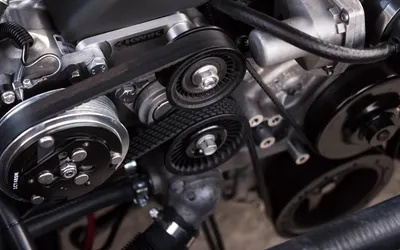
Check for bearing play by grabbing the pump pulley (with the accessory belt off, not with fingers anywhere that could get pinched) and wiggling firmly. Any detectable rotational play or axial play suggests the bearing is worn. Check the weep hole — usually on the bottom of the pump body — for signs of recent or ongoing coolant weep. A crusty deposit around the weep hole is history; visible wet coolant is current.
Water pumps are consumables on performance or high-load applications. On a street car over 100,000 miles that hasn’t had the pump replaced, a preemptive replacement before summer is cheap insurance. A pump failure at highway speeds in August heat is not cheap.
Thermostat behavior
A thermostat that opens late causes coolant to run hotter than it should in low-load driving, and this is one of the easier-to-miss cooling problems. The car runs normally under moderate load because airflow through the radiator overcomes the limited coolant circulation. But in stop-and-go traffic in summer heat, where airflow is minimal and cooling depends entirely on the coolant flow rate, a slow-opening thermostat shows up as creeping temperatures.
Thermostat testing is straightforward: pull the thermostat, put it in a pot of water on a stove with a thermometer, and watch at what temperature it starts to open. A thermostat rated at 195°F should start opening at around 195°F. A thermostat that opens late or only partially is failing, even if the car runs acceptably in cool weather.
For modified engines that see heavy load, a lower-temperature thermostat (180°F for boosted applications, 160°F for race-only use) is common. Don’t go below what the engine management is calibrated for — too cold a thermostat can trigger warm-up enrichment that hurts economy and can mask other issues.
Capacity upgrades for modified applications
If you’ve added power to an engine — a turbo kit, a supercharger, significant tuning — the stock cooling system may not have capacity for the new thermal load. Symptoms: longer drives in moderate temperatures show creeping coolant temperatures. Track sessions heat-soak the system in ways that didn’t happen before the power increase. Stop-and-go in hot weather shows higher temperatures than it used to.
Capacity upgrades range from a larger, higher-efficiency aluminum radiator to an auxiliary oil cooler to a dedicated transmission cooler to a complete system overhaul. For most street-driven modified cars, a radiator upgrade and a supplemental oil cooler cover 80% of the cases. Track cars need more comprehensive thermal management planning.
Bottom line
Cooling system failures in July are preventable in April. Coolant condition, pressure test, hose inspection, water pump check, and thermostat verification are all things that take an afternoon and address the most common summer failure modes. For modified cars, add capacity planning to the list. The alternative is chasing a problem from the side of the road in August, which is always more expensive and always less fun.