Dealers need to move 2025 inventory before 2026 models arrive, and that urgency translates directly into better prices for buyers. The discounts are real, sometimes thousands below MSRP on models that were selling at sticker six months ago. But a good price on a car that’s about to be replaced by a significantly updated version isn’t necessarily a good deal. Knowing when the discount outweighs the age penalty requires understanding how model-year cycles, incentives, and depreciation actually work.
Key takeaways
- Late-model-year discounts on outgoing inventory can save $2,000-$8,000 depending on the vehicle
- Carryover models with no significant changes for 2026 represent the strongest buying opportunity
- Mid-cycle refreshes and full redesigns for 2026 make the outgoing 2025 a worse value proposition
- Manufacturer incentives (rebates, low APR financing) peak in September through November as new inventory arrives
- Depreciation hits harder on the last model year before a redesign
How model-year clearance pricing works
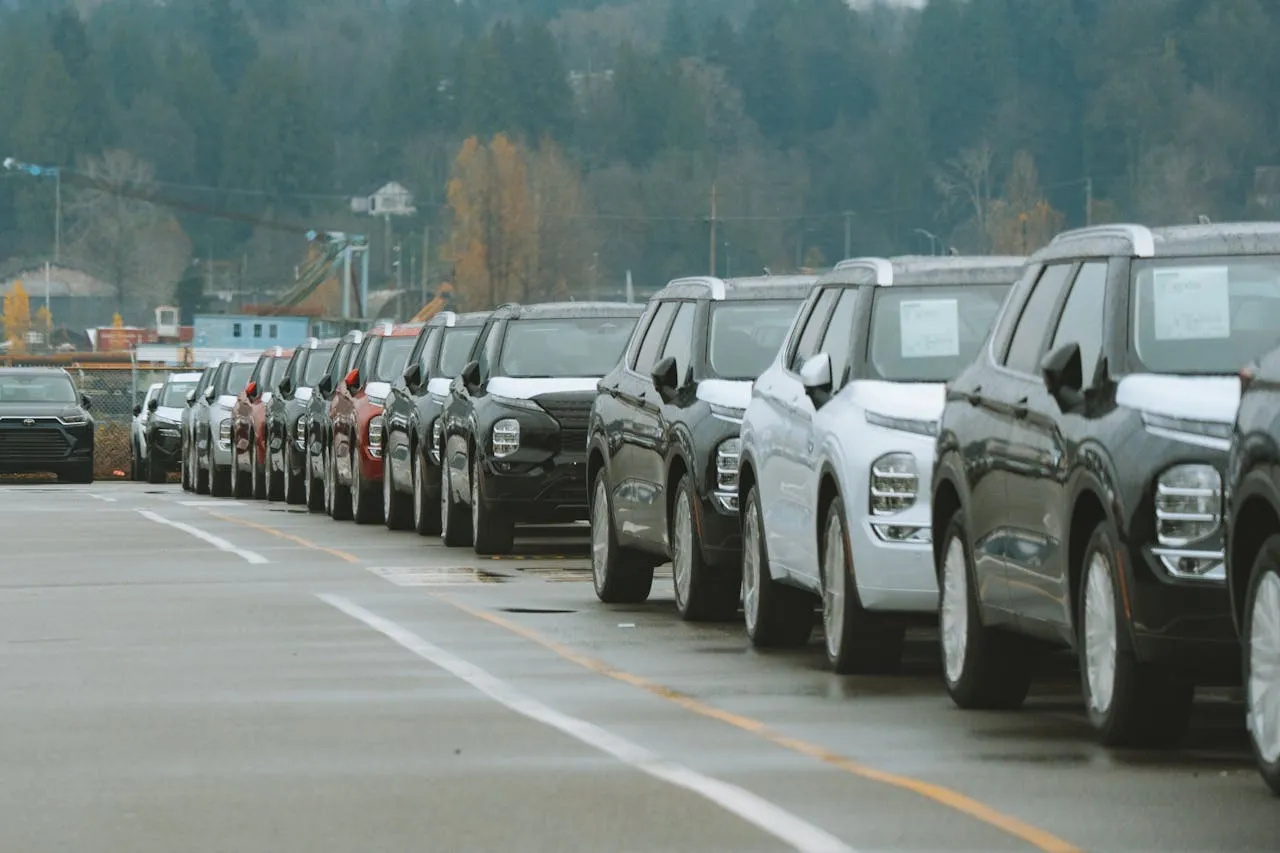
Manufacturers build vehicles on a model-year calendar that doesn’t align with the regular calendar. A “2026 model” might start arriving at dealers in August or September 2025. Once that happens, every remaining 2025 on the lot becomes last year’s model in the eyes of the market, even if it rolled off the assembly line two months ago.
Dealers pay floor-plan interest on unsold inventory, which means every day a car sits on the lot costs money. As 2026 models arrive, the pressure to discount 2025s increases. This is when you see invoice pricing, dealer cash incentives, and manufacturer rebates stack up to create genuine savings.
The discounts vary by segment. High-volume models like the Toyota Camry, Honda CR-V, and Ford F-150 generate bigger clearance incentives because dealers have more units to move. Low-volume enthusiast cars and trucks with constrained supply, like the Ford Bronco Raptor or Toyota GR Corolla, rarely see meaningful discounts regardless of timing because demand exceeds supply.
When the discount is a genuine deal
The strongest buying position is a 2025 model that carries over to 2026 with minimal changes. If the same engine, platform, safety features, and infotainment system continue unchanged, you’re getting essentially the same car at a lower price. The only difference is the number on the title.
Check the manufacturer’s announcement schedule for 2026 models. If the 2026 version of the car you’re considering is confirmed as a carryover with no structural changes, buying the 2025 at a discount is one of the smartest moves in car buying. You save money upfront, and the depreciation curve flattens because the two model years are functionally identical.
This applies broadly across the industry right now. Many 2025 models are mid-cycle entries that won’t see changes until 2027 or later. Mainstream sedans, compact crossovers, and full-size trucks in the middle of their generation cycles are prime candidates.
Financing incentives sweeten the math further. Manufacturers often offer 0 percent or low-APR financing on outgoing inventory that isn’t available on the new model year. Over a 60-month loan, the interest savings alone can exceed a thousand dollars compared to standard rates on a 2026.
When waiting for 2026 makes more sense
If the 2026 model introduces a mid-cycle refresh, the calculus changes. Refreshes typically bring updated styling, a revised infotainment system, new safety features, and sometimes powertrain improvements. The 2025 version depreciates faster once the refreshed model is available because used-car buyers can see the visual difference immediately.
Full redesigns are an even stronger reason to wait. A ground-up new generation brings a new platform, new interior architecture, improved crash structure, and often meaningful gains in fuel efficiency and technology. The outgoing generation takes a significant depreciation hit because it’s instantly outdated.
Research whether your target model is due for a refresh or redesign. Automotive press and manufacturer teasers usually signal these changes months in advance. If a redesign is confirmed for 2026, the 2025 discount needs to be substantial, think $5,000 or more, to offset the accelerated depreciation you’ll face.
The exception is if you plan to keep the car for 10 or more years. Long ownership periods diminish the importance of model-year freshness because you’ll drive through the depreciation curve regardless. In that case, the lower purchase price of the outgoing model wins.
The depreciation math
A new car depreciates roughly 20-25 percent in the first year of ownership. Buying a 2025 model in September at a $4,000 discount effectively pre-absorbs some of that depreciation. You’re buying the car at closer to its year-one trade-in value, which means your total depreciation over the first 36 months is lower than if you’d bought a 2026 at full price.
This only holds if the model is a carryover. If the 2026 is a redesign, the 2025 depreciates faster than average because used-car buyers prefer the newer design. In that scenario, you might save $4,000 at purchase but lose $6,000 more in depreciation over three years, resulting in a net loss.
Lease residual values tell the same story. Leasing companies set residuals based on projected future values, and they’re well aware of model-year cycles. The residual on a 2025 model leased in September will be lower than the same model leased in March, because the leasing company knows the car will be two model years old when the lease ends.
Negotiation leverage in clearance season
Late-model-year inventory gives you genuine negotiation leverage because the dealer’s incentives are aligned with yours. They want the car gone. You want a discount. The transaction works when both sides acknowledge the reality.
Start with the manufacturer’s published incentives for the model. These are usually available on the brand’s website and represent the baseline discount. Then negotiate the sale price separately from the incentives. A common tactic is for dealers to present the incentive as their discount, when in reality you’re entitled to the incentive regardless of the negotiated price.
Request quotes from multiple dealers. In clearance season, dealers compete aggressively for sales, and an email quote from a competing dealer is powerful leverage. Be specific about trim, color, and options so the quotes are apples-to-apples.
Don’t let urgency work against you. Dealers may imply that inventory is running out, but 2025 models don’t disappear overnight. The clearance period typically extends from August through November, giving you months to find the right car at the right price. Patience is your best tool.
Helpful references
- KBB – Current pricing, incentives, and fair purchase price data
- IIHS Ratings – Safety ratings to compare between model years
- FuelEconomy.gov – EPA fuel economy comparisons across model years
Bottom line
Buying a 2025 model at a clearance discount is smart when the 2026 is a carryover with minimal changes. It’s risky when a redesign or significant refresh is coming, because accelerated depreciation can erase the upfront savings. Check what’s changing for 2026, do the depreciation math, and let the numbers guide the decision rather than the sticker price alone.