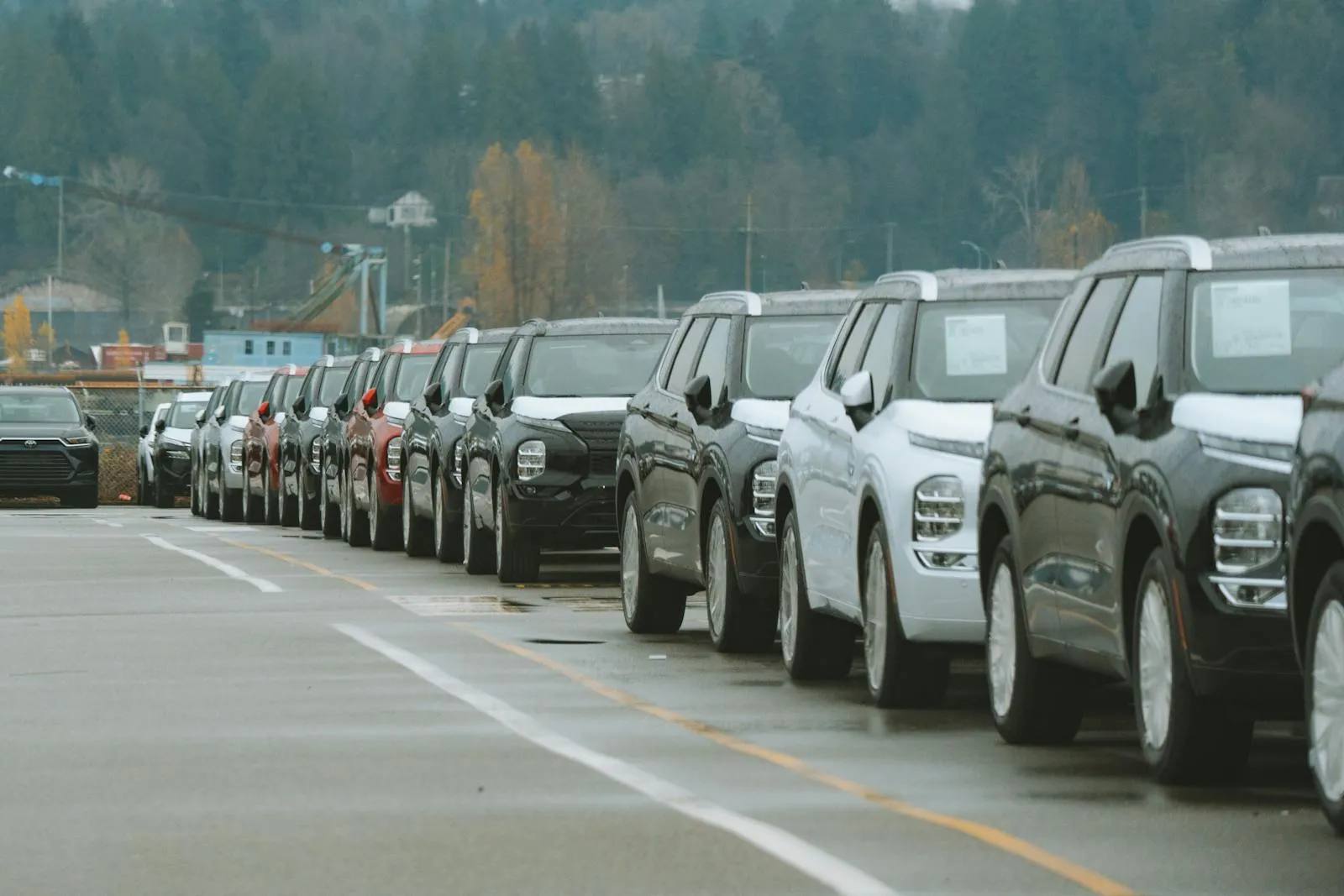
By late April, leftover 2025s have been sitting on dealer lots through two model-year cycles and three quarterly sales reports. The carrying cost is real, the floor-plan interest has eaten into the dealer’s margin, and the 2026 versions of the same vehicles are either already in stock or arriving in the next sixty days. That combination produces some of the year’s best new-car discounts — but it also produces a few situations where the leftover is genuinely worse value than the new model year. The trick is knowing which scenario you’re in before you walk onto the lot. Here’s how I think about it when I’m helping someone shop for a new vehicle this spring.
Key takeaways
- Leftover 2025 discounts in May are typically 8–15% off MSRP on slow-moving inventory, with manufacturer cash on top
- The discount is real value when the 2026 changes are minor (color updates, trim shuffles, infotainment tweaks)
- The 2026 is worth paying up for when there’s a meaningful platform refresh, a new powertrain, or a safety-tech addition that matters
- Resale impact: a one-year-old vehicle on title is roughly equivalent in depreciation either way after three years
- Financing rates have diverged sharply between leftover and current model year — confirm the APR before assuming the discount is the better deal
Where the discount is real
Manufacturer-to-dealer cash on remaining 2025 inventory has been running between $2,000 and $6,000 on most non-truck segments through April, with some compact crossovers at the higher end of that range. Dealer-side discounts on top vary by lot but typically add another $1,500 to $3,000 on volume sellers. Stacking those gets you into 8–15% off sticker territory on a vehicle that, mechanically, is identical to a 2026 in most cases.
The vehicles where this works best are model lines that didn’t get a meaningful refresh for 2026. If the 2026 is a carryover with a new color palette, a slight trim restructuring, or a software update that’s also being pushed to 2025 vehicles via OTA, the leftover is almost always the better buy. You’re getting the same car for thousands less, and you’re paying a one-year depreciation hit that you would have absorbed anyway.
Look at the specific changes for the model you’re considering rather than the marketing language. “All-new for 2026” is a phrase manufacturers use loosely. Pull the spec sheets for the 2025 and the 2026 of the same trim and compare the actual mechanical and feature lists. If the differences are paint, badging, and a couple of trim-level reshuffles, the leftover is the obvious play.
Where the 2026 earns its premium
The leftover loses its appeal when the 2026 brings something material. There are four categories worth paying up for.
The first is a mid-cycle refresh that includes a meaningful platform change — new dampers, revised steering calibration, structural changes that affect ride or handling. These are the changes that show up in driving reviews from outlets that test back-to-back, and they’re the kind of update that the 2025 won’t be getting via software.
The second is a powertrain change. If the 2026 introduces a more efficient engine, a hybrid variant in a previously non-hybrid line, or a transmission swap, that’s worth paying for if it matches your needs. Fuel economy improvements of two or more MPG over a six-year ownership window add up to real money, and the resale gap on hybrid versions versus pure-ICE versions of the same vehicle has been widening.
The third is a safety-technology addition. If the 2026 includes standard automatic emergency braking improvements, a better blind-spot system, a new generation of driver-attention monitoring, or features like rear automatic emergency braking that are now becoming common on mainstream trims, that’s protection you can’t add to a 2025 aftermarket. For families, this often justifies the premium.
The fourth, less obvious category is when the manufacturer has announced that 2025 models will not receive the next significant infotainment or OTA platform update. This has become a real consideration as connected-car platforms get more integrated with the underlying hardware. If the 2025 won’t get the next CarPlay-equivalent update, the next routing engine for the native nav, or the next iteration of voice control, that’s a five-year ownership delta that compounds.
Financing has diverged
This is the change most buyers miss. Manufacturer-subsidized financing rates on 2026 inventory have been running 1.9 to 3.9 percent on most brands through April. Rates on leftover 2025s, in many cases, are not subsidized at all and reflect standard captive-finance pricing — which has been in the 6.5 to 8.5 percent range for most prime borrowers.
Run the numbers before you assume the discount wins. A $5,000 sticker discount on a leftover 2025 financed at 7.5 percent over 60 months is not the same as a $1,000 discount on a 2026 financed at 2.9 percent. On a $42,000 vehicle, the lower-rate 2026 deal can come out within a few hundred dollars of the leftover, even with the larger sticker discount. That math gets worse when you stretch the term to 72 or 84 months.
The exception is buyers who are paying cash or financing through a credit union with rates competitive with the captive-subsidized rate. In that case, the discount on the leftover is real money and the financing-rate gap doesn’t matter to you. For everyone else, the APR on the deal is at least as important as the headline discount.
The trade-in and resale question
Buyers often ask whether the leftover hurts them on resale because it’s a “year older” the moment they title it. The answer is “less than you think, and it depends on the segment.”
For mainstream sedans, crossovers, and trucks that depreciate on a normal curve, the resale gap between a 2025 bought new in May 2026 and a 2026 bought at the same time narrows considerably by year three of ownership. KBB and Black Book residual data show roughly 2 to 4 percentage points of additional depreciation on the leftover at 36 months, which on a $40,000 vehicle is $800 to $1,600. If you saved $5,000 buying the leftover, you’re still ahead.
For vehicles that hold value abnormally well — certain truck configurations, performance variants, hybrid models in high demand — the resale gap can be larger and the leftover discount can be smaller, which collapses the value proposition. Wrangler, Tacoma, and Land Cruiser owners typically don’t see meaningful leftover discounts because the demand for the prior model year stays strong enough that dealers don’t have to discount.
For luxury and exotic segments, leftover dynamics work differently again. Discounts on prior-year inventory in those segments can be aggressive, but the resale impact of being a “year older” is more pronounced because the buyer pool tracks model years more closely.
What to ask the salesperson
When you’re working a leftover deal, three questions matter more than the rest.
First: what is the actual manufacturer-to-dealer cash on this VIN as of today, and what does the dealer’s pricing look like with that applied? Some manufacturers post leftover incentives publicly; others don’t. The dealer knows what’s on the vehicle.
Second: what’s the buy rate on the available financing for this specific vehicle, separated from the marked-up rate they’ll quote you first? Captive finance offers often differ between current and prior model year, and you need both numbers to compare cleanly.
Third: is there any hold-back or end-of-quarter program that affects what the dealer is willing to do this week? Dealers face real cost pressure on aged inventory at quarter-end, and May 2026 is a soft point — the mid-quarter month after April’s results have closed but before the June end-of-quarter push. Some dealers will take a slimmer deal in mid-quarter to clear the lot before they need to write off another month of carrying cost.
Bottom line
The leftover 2025 is the better buy when the 2026 is a carryover with cosmetic changes, the financing rate isn’t dramatically worse, and the discount stack gets you to 10% or more off effective sticker. The 2026 wins when there’s a real platform, powertrain, or safety update — or when the financing-rate gap eats most of the leftover discount on a financed deal. The hardest part is doing the comparison honestly rather than letting either the discount headline or the new-model excitement drive the decision. Pull both spec sheets, get both APR offers, and let the actual numbers tell you which one you should drive home.