
Every current-generation vehicle from every major manufacturer now receives over-the-air software updates. Five years ago this was a Tesla-specific feature with a lot of press. Today it’s the baseline across the industry, and the updates are doing meaningfully more than the release notes suggest. Battery management algorithms, ADAS behavior, climate control logic, and regenerative braking calibration can all change between Tuesday and Wednesday on the same vehicle, with no mechanical work performed. Owners who don’t read release notes don’t know when the driving experience is about to change, and that gap between what’s actually happening and what owners understand is getting wider.
Key takeaways
- OTA updates now modify vehicle behavior in ways that range from trivial UI tweaks to substantive driving-dynamics changes
- Battery management and regenerative braking calibrations affect range and drive feel, and are rarely highlighted clearly in release notes
- ADAS behavior changes — adjusted lane-keep thresholds, new automatic emergency braking activation triggers — often ship without prominent disclosure
- Reading release notes carefully is now part of owning a modern car, not an optional enthusiast activity
- Some manufacturers allow update deferral; others don’t, and the difference matters when a new update introduces a problem
What OTA updates can legitimately change
The scope of what an over-the-air update can modify on a modern vehicle is broader than most owners realize. Essentially everything software-controlled on a current-generation car is potentially changeable through an OTA update. That includes:
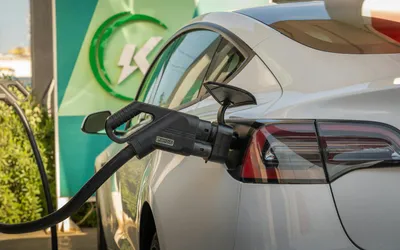
Battery and powertrain software — charging curves, regen braking calibration, power output limits at different battery states of charge, thermal management thresholds. A Tesla that charged to 90% at 150 kW in January might charge to 90% at 130 kW in April with the same battery and the same charger, because the software decided to extend pack life by reducing peak rates.
ADAS systems — lane-keep sensitivity, adaptive cruise behavior, blind-spot monitor activation range, automatic emergency braking thresholds, and the specific conditions under which hands-off driving features engage or disengage. These are often tuned in response to incident data collected from the manufacturer’s fleet, and the changes ship quietly.
Infotainment and UI — the most visible category and the one most release notes actually describe in detail. This is where the press coverage concentrates, and it’s also the least consequential category of OTA change for most owners.
Safety systems — stability control thresholds, traction control calibrations, airbag deployment logic under specific conditions. These usually ship only in response to specific issues and are often covered under safety recall language, but the distinction between “recall” and “improvement” has blurred.
Release note reading
The release notes provided with OTA updates vary enormously in quality across manufacturers. Tesla’s release notes are detailed and specific; BMW’s are often vague; some GM products ship updates with release notes that read as “bug fixes and improvements.” When release notes are vague, the update may still be making meaningful changes — the vagueness doesn’t indicate insignificance.
What to look for in release notes: any mention of battery, charging, regen, energy consumption, ADAS, driver assist, emergency braking, stability control, or drivetrain. Any of those keywords suggests the update is changing something consequential. Infotainment and climate keywords suggest lower-impact changes.
When release notes are vague, a useful practice is to note the update date, the update version, and your baseline experience in the days before. Compare driving feel in the following week. If something changes that you didn’t expect — regen feels different, ADAS engages under new conditions, climate control behaves differently — you’ll have the timing to correlate with the update.
When updates introduce problems
Every OTA update could theoretically introduce a regression. In practice, most don’t — manufacturer testing catches most issues before broad rollout. But some updates do introduce problems that only surface in real-world conditions the manufacturer’s test fleet didn’t cover.
When this happens, the recourse varies by manufacturer. Tesla has historically shipped follow-up updates to address issues within days or weeks. GM and Ford have been slower. BMW and Mercedes are typically conservative about reverting or adjusting after a release.
If an update introduces a problem that affects your driving experience meaningfully — worse range, noisier cabin, more aggressive lane-keep corrections, changed charging behavior — document it. Take screenshots of the app showing energy use before and after. Note the specific conditions where the issue manifests. Owner-community forums and manufacturer service advisors are both more responsive to specific documented reports than vague complaints.
Update deferral and control
Different manufacturers give owners different levels of control over when updates install. Tesla lets owners defer updates with some flexibility but ultimately ships them on the manufacturer’s schedule. Ford’s Power-Up system allows scheduling within a window. Some GM products install updates automatically with minimal user control. Most allow you to decline an update once, but not indefinitely.
Knowing your manufacturer’s policy before an update is pending is useful. A manufacturer that ships updates without owner approval is taking a position about software ownership that you should be aware of. A manufacturer that allows deferral gives you the option to let early adopters surface problems before you install.
A practical approach: install updates a day or two after release rather than immediately. Check owner forums — Teslamotors, F-150 Lightning Forum, the model-specific subreddits — to see if early installers have surfaced any issues. If the first 24–48 hours are quiet, the update is probably fine. If the early reports are concerning, defer if you can.
What this means for ownership
Owning a car that receives OTA updates is different from owning one that doesn’t. The car you buy is not exactly the car you’ll own in three years — the software will have evolved, some features may have been added, some may have changed behavior, and a few may have been removed outright. That’s the current reality of connected vehicle ownership.
For buyers: this is a factor worth weighing when choosing between comparable vehicles. A manufacturer with a strong OTA track record and clear release communication is offering a genuinely different ownership experience from one with vague release notes and minimal post-launch support. Neither is universally better, but they’re different enough that it’s worth understanding before purchase.
For current owners: reading release notes is now part of responsible ownership. The updates are real changes to the vehicle, not just software tweaks.
Bottom line
OTA updates are doing more than the release notes usually describe. Battery management, ADAS calibration, and drivetrain behavior all change between updates, and the effects on the driving experience are real. Reading release notes, documenting baseline behavior, and watching owner forums around update release dates are all ways to stay informed about what your car is actually doing. The manufacturers that do this communication well make ownership easier. The ones that don’t are hoping owners won’t notice — and most won’t, unless something goes wrong.