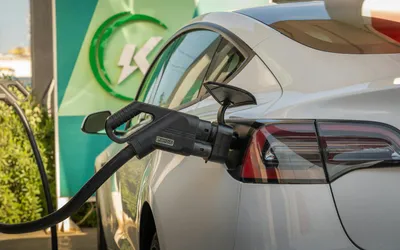
A 2019 Toyota Camry is, mechanically, the same car today as the day it left the factory. A 2019 Tesla Model 3 is not. It has received dozens of software updates since new — some cosmetic, some substantive. The acceleration in Sport mode feels different. The Autopilot behavior has changed. The interface has been overhauled twice. This matters enormously when you’re buying one used, because you’re not just buying hardware. You’re buying into a software ecosystem with a future you can’t fully predict.
Key takeaways
- OTA-capable vehicles can gain features after purchase, but only if the manufacturer continues supporting that platform
- Some automakers (BMW, GM, Mercedes) sell features as recurring subscriptions that don’t transfer to subsequent owners
- Tesla’s hardware-gated features (Full Self-Driving, Enhanced Autopilot) follow the vehicle — but FSD’s value depends entirely on Elon Musk’s roadmap
- Rivian and Lucid have demonstrated genuine feature additions via OTA — not just bug fixes
- The used car due diligence checklist now includes software version, subscription status, and support timeline
What OTA updates actually do (and don’t do)
There are two meaningfully different categories of OTA update in automotive. The first is firmware updates — patches to embedded control units for bug fixes, calibration improvements, and safety recalls. These are unglamorous and important. Every major automaker now delivers some version of these remotely, and they generally don’t affect your purchase decision either way.
The second category is software feature delivery — genuine functional additions enabled by pushing new code to existing hardware. This is where it gets interesting for used car buyers. Tesla is the extreme example: the same physical hardware in a 2021 Model Y that shipped without certain Autopilot behaviors has since received camera-based speed sign reading, improved traffic light detection, and several FSD beta builds. Rivian added camp mode, vehicle hold improvements, and phone-as-key refinements well after the first trucks shipped. These aren’t incremental tweaks. They’re meaningful capabilities added to hardware someone already owns.
The catch is that this model only works as long as the manufacturer has economic interest in continuing to support that platform. And not all of them do.
The subscription trap: features you’re renting, not owning
BMW made headlines in 2022 for charging subscription fees for heated seats on cars where the hardware was already installed. The backlash was immediate enough that they walked it back in some markets — but the underlying model didn’t go away. BMW’s ConnectedDrive subscriptions, which cover features like real-time traffic data, remote lock/unlock, and some driver assist functions, are typically tied to the original owner’s account and don’t automatically transfer. When that subscription expires, the car’s behavior changes.
General Motors runs a similar system with Super Cruise. The hands-free highway driving system comes with an included trial period — typically three years on new vehicles — after which it requires an OnStar subscription to continue working. The hardware stays in the car. The feature doesn’t, unless the subsequent owner pays to reactivate it. Used Escalades and Silverados with Super Cruise hardware are sitting on lots right now with that feature effectively bricked because the original subscription lapsed and the dealer hasn’t re-enrolled it.
Mercedes-Benz sells rear-axle steering and performance unlock packages as purchasable software additions. These have historically been tied to the vehicle VIN rather than the owner account, which means they should transfer — but “should” is doing a lot of work there. Confirming status before purchase requires checking the vehicle’s connected services portal, not just driving it.
The pattern isn’t unique to luxury brands. Connected features at every price point increasingly follow this model because it’s a recurring revenue stream that automakers have struggled to find in any other form.
Cars that get better vs cars that get forgotten
The optimistic version of OTA updates — Tesla and Rivian demonstrating genuine feature additions on existing hardware — is real. But it requires sustained software investment that not every manufacturer has committed to.
Rivian’s update cadence on the R1T and R1S has been notably consistent. The software shipped at launch was incomplete in ways the team acknowledged publicly, and the updates that followed were substantive. Camp Speaker mode, max battery pack preconditioning, improved range estimates — these are things that owners got without paying extra, and they meaningfully changed the vehicle. Lucid has followed a similar pattern on the Air.
The contrasting case is what you might call “connected but abandoned” — vehicles that shipped with OTA capability and a manufacturer app, but where software development has slowed or stopped. This is increasingly common among legacy automakers who rushed connected features to market in 2020–2023 without the internal infrastructure to support them long-term. A Ford Mach-E from 2021 with SYNC 4 gets updates, but the cadence is slow and the feature additions have been incremental compared to what the hardware could theoretically support. A Chevrolet Bolt EV runs on a software platform that GM has effectively deprecated in favor of its Ultium-based vehicles.
For used car buyers, the question is whether the platform you’re buying into has active development behind it — or whether the connected features are effectively frozen at their current state.
What to check before you buy
This is where used car due diligence has genuinely changed in the last few years. The CarFax check and the pre-purchase inspection are still necessary. They’re no longer sufficient.
Software version and update history: Tesla’s service history in the app shows software versions. For other brands, ask the dealer to pull the current software version from the infotainment system and compare it against the manufacturer’s published current version. A car that’s two major revisions behind may have update issues, or may be on a hardware variant that’s been quietly dropped from the update path.
Subscription status: Specifically ask which connected features are active and which have lapsed. Have the dealer demonstrate Super Cruise, ConnectedDrive, or whatever premium driver assistance the listing mentions. If they can’t demo it live, assume it’s not active.
Feature transferability: BMW, GM, and Mercedes-Benz all have VIN-based portals where you can look up connected features and subscription status before purchase. Use them. This takes ten minutes and has saved multiple people I know from buying a feature they thought was standard and discovering it required a $1,200/year subscription.
FSD and enhanced autopilot on Tesla: Full Self-Driving on Tesla has historically been transferable but Elon Musk has changed this policy more than once. As of early 2026, FSD is vehicle-attached on most configurations — but verify this at the time of purchase. The dollar value swing between a Model 3 with and without FSD transferred is large enough that it materially affects negotiating position.
The emerging support timeline problem
The longer-term issue that used car buyers are only beginning to reckon with is platform end-of-life. Manufacturers don’t publish explicit sunset timelines for software support on existing vehicles, but the market signals are starting to appear.
GM has been explicit that its older MyLink and IntelliLink infotainment platforms won’t receive new feature development — only security patches, which themselves have an implicit end date. The 4G LTE modems in vehicles from 2020 and earlier will eventually face network sunset issues as carriers continue their 4G/5G transition. Tesla has committed to supporting its Full Self-Driving hardware through the Hardware 3 (FSD computer) platform, but Hardware 2 and 2.5 vehicles have already been told they won’t receive the full neural net inference features.
None of this means you shouldn’t buy a connected used car. It means the software state of that car is now a legitimate line item in the purchase evaluation — not just the mileage, service history, and mechanical condition. The gap between a well-supported platform and an orphaned one is wide enough to affect how you feel about the car three years after purchase.
Bottom line
OTA updates have genuinely improved the value proposition of some used vehicles — a 2022 Rivian R1T is meaningfully better software-wise than it was at launch, and that improvement follows the car to every subsequent owner. But the model has also introduced real complexity: features that require active subscriptions, features that lapse when subscriptions expire, and platforms that will eventually stop receiving meaningful updates entirely.
The due diligence checklist for a connected used car is longer now. Running through it before signing takes an hour. Not running through it can cost you a feature you were counting on, or a few thousand dollars in subscription fees you didn’t budget for.