CES has become the auto industry’s real tech preview — more revealing than most standalone motor shows because it focuses on the systems buyers actually interact with. This year’s edition in Las Vegas is shaping up around a handful of themes that could affect the cars you drive (or shop for) within the next two to three model years, not a decade from now.
Key takeaways
- NACS charging adoption is moving from announcements to real-world rollout, making public charging more predictable for EV shoppers.
- In-car AI assistants are shifting from novelty voice commands toward context-aware, multimodal interfaces that reduce distraction.
- Zone-based electrical architectures promise simpler wiring, faster OTA updates, and cheaper repair costs down the road.
- Solid-state battery prototypes are getting closer to production timelines, with multiple suppliers targeting 2027–2028 launches.
- ADAS interfaces are finally getting attention for clarity, not just capability — better driver feedback loops and fewer false alerts.
NACS charging standardization hits critical mass
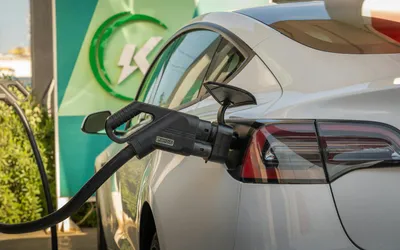
The biggest practical EV story heading into 2026 is not a new battery chemistry or a flashy concept. It is the quiet, grinding work of making public charging less frustrating. NACS (the Tesla-originated North American Charging Standard) has gone from a handful of adoption announcements in 2023 to a genuine industry default. Ford, GM, Rivian, Hyundai, BMW, Mercedes, and others have committed to NACS ports on new models, and the first wave of non-Tesla vehicles with native NACS ports started reaching dealer lots in late 2025.
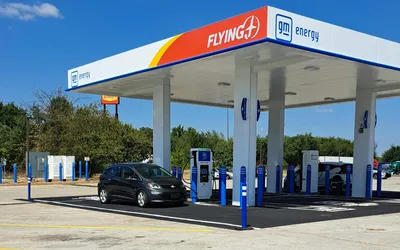
At CES, expect charging network operators like ChargePoint, EVgo, and Electrify America to showcase upgraded stations with both NACS and CCS connectors, plus software improvements aimed at reducing payment friction and session reliability. For buyers, this is the signal that matters most: public charging is becoming more like pulling into a gas station and less like troubleshooting a hotel Wi-Fi connection.
The remaining question is adapter availability and reliability for older CCS-equipped EVs. Several suppliers are showing NACS-to-CCS adapters at CES, and the quality spread matters — a $150 adapter that works flawlessly is worth far more than a $50 one that drops sessions at 80 kW.
In-cabin AI moves past the gimmick phase
Every CES brings a wave of AI buzzwords, but the automotive applications worth paying attention to this year are the ones that reduce cognitive load instead of adding to it. Qualcomm’s Snapdragon Digital Chassis platform and NVIDIA’s DRIVE concierge are both pushing toward AI that can interpret context — understanding not just what you said, but what you probably meant based on driving conditions, recent destinations, and vehicle state.
The practical version of this looks like a voice assistant that adjusts navigation, climate, and media together when you say “I’m running late” instead of requiring three separate commands. BMW and Mercedes have been previewing generative-AI cabin features through 2025, and the CES demos should give a clearer picture of how conversational and how reliable these systems actually are in production trim.
The risk, of course, is that automakers treat AI as a subscription upsell rather than a core interface improvement. If the best voice features require a $15/month plan on top of a $55,000 car, adoption will stall. The companies that bake useful AI into the base experience will pull ahead.
Zone-based vehicle architectures simplify everything underneath
This is the unsexy-but-transformative trend. Traditional car wiring uses a point-to-point harness — every sensor, light, and module gets its own wire run back to a central controller. The result is a harness that can weigh over 100 pounds and makes diagnosing electrical issues a nightmare.
Zone architectures break the vehicle into physical regions (front-left, rear-right, etc.), each managed by a local controller that communicates with a central vehicle computer over a high-speed network. Continental, Aptiv, and several Tier 1 suppliers are demonstrating production-ready zone controllers at CES this year.
For everyday drivers, the benefits show up as faster and more reliable over-the-air software updates, easier integration of new features post-purchase, and potentially lower repair costs because fewer unique wiring sub-assemblies need stocking. For enthusiasts, it also means the aftermarket will eventually need to interface with these zone controllers rather than splicing into individual wire runs — a shift that is already starting to reshape how companies like Comma.ai and aftermarket lighting suppliers approach integration.
Solid-state batteries inch toward real production dates
Toyota, Samsung SDI, and QuantumScape have all made solid-state battery announcements over the past two years, and CES 2026 is a natural stage for updated timelines. Solid-state cells promise higher energy density (meaning more range per pound), faster charging, and better thermal stability compared to current lithium-ion packs.
The realistic timeline for production vehicles with solid-state packs is still 2027 at the earliest, with most analysts expecting limited-volume luxury applications first — think a Toyota Lexus flagship or a premium Samsung-supplied European sedan, not a $35,000 crossover.
What matters at CES is whether the demonstrations show cells at automotive scale (large-format pouch or prismatic cells, not coin cells in a lab) and whether cycle-life data supports a 10-year, 150,000-mile warranty window. Until those boxes are checked, solid-state remains a “watch” story rather than a “buy” signal.
ADAS interfaces finally prioritize driver clarity
Advanced driver-assistance systems have gotten remarkably capable — adaptive cruise, lane centering, and automated lane changes are available on vehicles under $40,000. But the interface layer has lagged. Too many systems flash cryptic icons, disengage without clear explanation, or rely on chimes that sound identical whether the situation is minor or urgent.
Several suppliers at CES are showing redesigned ADAS feedback systems: color-coded lighting strips in the windshield header, haptic steering wheel cues calibrated to urgency level, and head-up display overlays that highlight the specific object or lane boundary that triggered an alert. Bosch, Mobileye, and Magna all have demos focused on this transparency layer.
This is the kind of improvement that does not make headlines but dramatically affects trust. A driver who understands why the system braked or disengaged is more likely to use it correctly — and less likely to over-trust it. Expect to see these interface refinements showing up in 2027 model-year vehicles from multiple brands.
What to actually watch for (and what to ignore)
Ignore the concept cars with butterfly doors and transparent OLED dashboards — those are designed for Instagram, not your driveway. Instead, watch for:
- Charging interoperability demos that show real vehicles plugging into real stations with mixed connector types.
- AI assistant demos conducted in noisy environments with natural language, not scripted prompts in a quiet booth.
- Supplier announcements with named OEM partners and model-year targets — those indicate committed production plans, not aspirational roadmaps.
- Repairability and update speed claims tied to zone architectures — these signal whether the benefits will reach owners or stay on engineering whiteboards.
The gap between CES spectacle and production reality has been narrowing each year. The 2026 show should deliver a few announcements that are genuinely useful for anyone shopping for a car in the next 24 months.
Helpful references
Bottom line
CES 2026’s automotive story is less about concept-car fantasy and more about the infrastructure, software, and architecture changes that will define what it actually feels like to own a car in the late 2020s. The trends worth tracking — NACS maturity, practical AI, zone architectures, and clearer ADAS feedback — are all on a two-to-three-year path to your driveway.