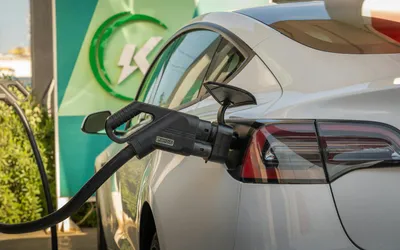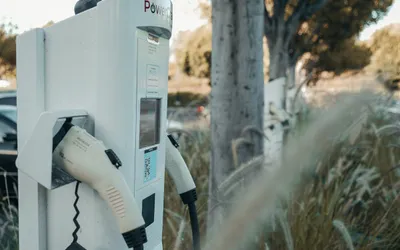
The public fast-charging experience in 2026 is genuinely different from what it was even two years ago. NACS adoption has opened most Tesla Supercharger locations to non-Tesla EVs, the major non-Tesla networks have improved reliability meaningfully, and the volume of EVs on the road has grown enough that crowded sessions during peak hours are now a routine experience rather than an occasional inconvenience. The social conventions that have developed around shared charging space have changed alongside the infrastructure, and some of the etiquette that was true in 2023 is wrong now. Here’s how the actual norms work in 2026, what idle fees are doing to behavior, and what to do when you arrive at a station and something isn’t working.
Key takeaways
- Plugging in next to an occupied stall in a paired-cabinet station can cut your charging speed in half — pick a non-paired stall when one’s available
- Idle fees on most networks now start within 5–10 minutes after charging completes; staying past 80% during a busy session is the universal etiquette violation
- Reporting broken stalls in the network’s app actually works in 2026; persistent issues at named locations get fixed faster than they did pre-2024
- NACS-equipped non-Tesla EVs at Supercharger sites should follow Tesla’s specific etiquette norms, not the conventions from non-Tesla networks
- Most queueing follows informal first-come, first-served convention; physical lines and signage exist at high-traffic locations only
How charging cabinets share power
The first piece of charging etiquette that requires understanding is how the underlying hardware works, because behavior that seems polite is sometimes actively bad for the queue.
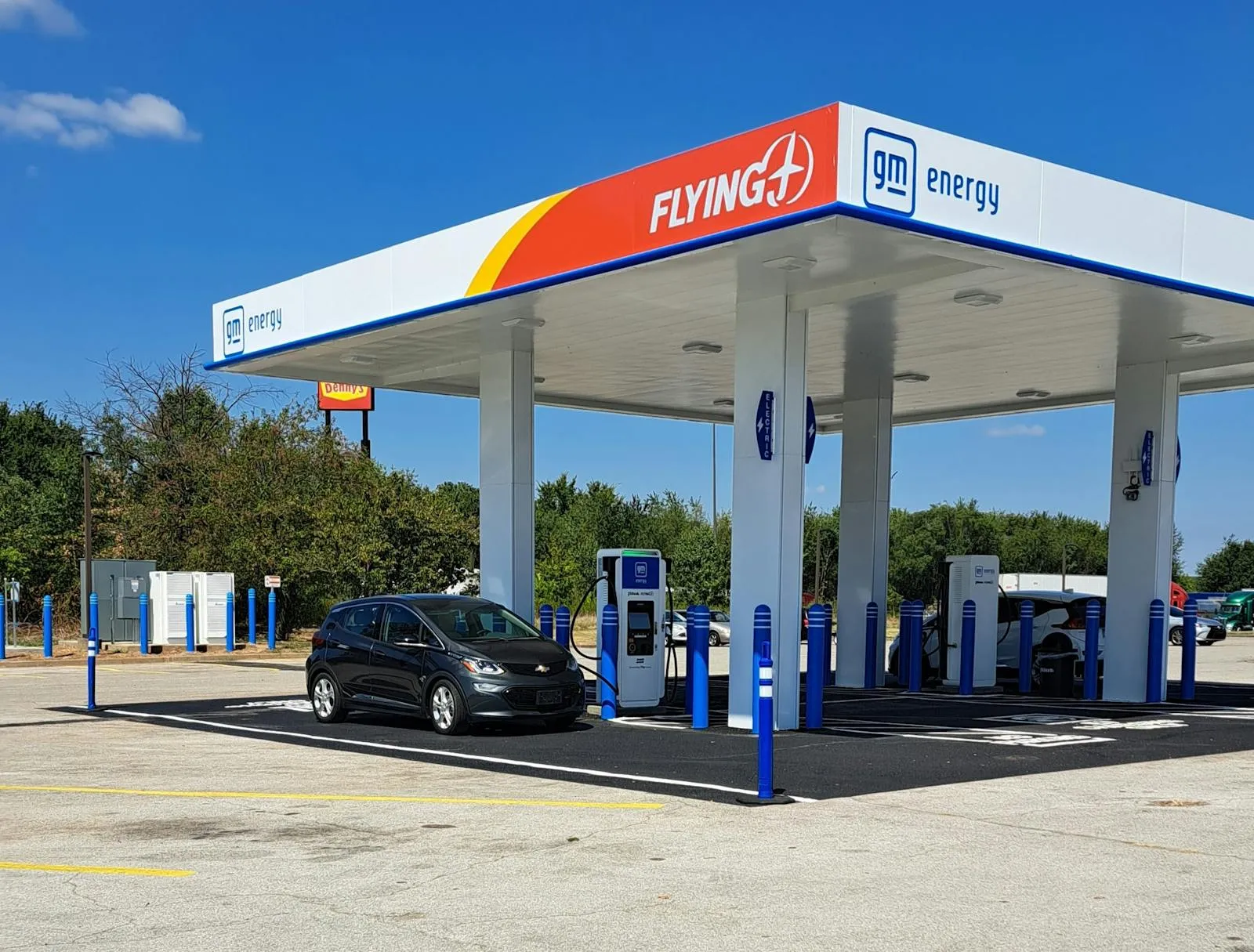
Most non-Tesla DC fast-charging cabinets are designed in pairs. Two charging stalls share a single power cabinet. When one car is using the cabinet, that car gets full available output (typically 150 to 350 kW depending on the station’s design). When two cars are plugged into both stalls of the pair, the cabinet splits its output between them. Depending on the cabinet design, the split might be even (each car gets half) or it might prioritize the first car plugged in (first car keeps full speed, second car gets remainder).
Tesla Superchargers work similarly but with more specific behavior. V3 and earlier Superchargers pair stalls (1A/1B, 2A/2B, etc.) such that plugging in next to an active session significantly reduces both cars’ speed. V4 cabinets are less prone to this behavior but still benefit from spacing out when stalls are available. The signage at each stall typically tells you the cabinet pairing.
The practical impact: when you arrive at a station with empty stalls, choose one that doesn’t share a cabinet with an active car. This isn’t politeness — it’s directly faster for you and doesn’t slow down the existing user. If the only available stall pairs with an active car, you’ll get whatever your share of the cabinet allows, which on a 350 kW cabinet split evenly is still a reasonable 175 kW. On a 150 kW cabinet split evenly, you’re looking at 75 kW, which is meaningfully slower.
When the station is full
The 2026 norm at full stations is informal first-come, first-served queueing. You pull up behind the line of cars that have arrived ahead of you and wait your turn. There’s no formal sign-up, no app-based queue (yet), and disputes about position are uncommon because most stations now have multiple stalls and turnover is frequent enough that wait times are bounded.
Some specific etiquette has emerged at busy locations:
If you can see that a charging session is nearly complete, it’s reasonable to position your car so you can move into the stall as soon as it opens. Pulling up close to the stall doesn’t speed up the car that’s charging — those sessions end when they end — but it positions you for a clean swap.
If you’re charging and you notice cars waiting behind you, the etiquette is to set your car to charge to a lower target (typically 80%) and unplug as soon as you reach it. Charging from 80 to 100% takes nearly as long as charging from 20 to 80% on most EVs because of the taper at the top of the curve. Holding a stall to add ten miles of range to your car when others are waiting is the most common etiquette violation.
If you’re not in a hurry and there are no waiting cars, fill to whatever you want. The etiquette is conditional on demand, not absolute.
If you’re plugged in and a queue forms while you’re inside the building, the polite move is to come back to your car and assess whether you can finish at your current state of charge. Most drivers in 2026 have apps that notify them when their session is at a target percentage, and the social expectation is that you respond to those notifications during peak hours.
Idle fees in 2026
The idle-fee structure has tightened considerably since 2024, and it has changed behavior at busy stations.
Tesla Supercharger sites have charged idle fees for years — typically $0.50 to $1.00 per minute starting five minutes after the session ends, doubled if the site is at 50% or higher utilization. The Supercharger network’s app sends notifications as you approach completion and again when fees begin. Most Tesla owners are well-trained on the system.
Electrify America implemented a similar policy in 2025 with some variation. Idle fees start ten minutes after session completion at most locations, with rates around $0.40 per minute. EVgo applies idle fees of $0.30 per minute starting five minutes after completion at locations marked as high-traffic. ChargePoint’s idle policies vary by site host.
The practical effect is that drivers leave when the session ends. The phenomenon of cars sitting at stalls for hours after charging finished, which was a real problem in 2022 and 2023, has largely disappeared at networks that enforce idle fees. The exception is locations where the host has chosen not to enforce, which produces the friction you’d expect.
If you arrive at a station and find a car that appears to have completed its session and is parked in a stall, the etiquette is to politely note your arrival (a knock on the window, a brief verbal request) rather than to wait silently. Most drivers respond reasonably to a polite request, and most idle-fee notifications are visible to the driver inside the building anyway.
The NACS situation
NACS adoption has moved from announcements to real availability, and the Supercharger network is now the largest practical fast-charging network for most non-Tesla EVs. The etiquette specific to Supercharger sites differs from non-Tesla networks in ways that matter.
The Supercharger handles are short. Non-Tesla cars with charging ports on the wrong side need to back into the stall to reach the cable, which means traversing an extra parking space and potentially crossing the path of cars trying to use the adjacent stall. Tesla has added longer cables at some V4 sites, and some V3 sites have been retrofitted with extension setups. Until your local site is updated, the etiquette is to use a stall that doesn’t require crossing into another stall’s space — which sometimes means waiting for a corner stall to open.
Supercharger pricing for non-Tesla cars is higher than for Tesla owners and varies by site. The Tesla app shows you the price at each location. The etiquette around idle fees and queueing is identical regardless of which brand you’re driving — Supercharger conventions apply to everyone using the network now.
If you encounter a Supercharger stall that doesn’t work with your car (charge initiation fails, the connector doesn’t seat properly, the session terminates immediately), the most useful thing you can do is report the specific stall through your car’s app or through the Tesla Supercharger app. Issues at NACS-adapter sites have been logged and addressed faster than they were in the early adoption phase.
When a stall is broken
Reliability has improved meaningfully across all major networks, but broken stalls still happen. The protocol for dealing with them in 2026 is more useful than it was three years ago.
First, try to start the session normally. If the session fails, try a different stall in the same station before assuming the cabinet or the network is the problem. Many issues are stall-specific (a damaged connector, a software state on a single stall) rather than site-wide.
If a second stall fails the same way and the issue appears to be cabinet-side, report through the network’s app. Both Electrify America and EVgo have report-a-station features that track which specific stall is failing and what the failure mode is. Reports do feed into the network’s maintenance dispatch and persistent issues at high-traffic locations are addressed within days, not weeks.
If you’re at a Supercharger and a stall fails, the Tesla app’s report flow is the right place. Network-wide Supercharger reliability has been the highest among major networks for years and the maintenance response is correspondingly fast.
If multiple stalls fail and the site is essentially down, the protocol is to find an alternative quickly. Apps like ABRP, A Better Routeplanner, and the major networks’ own apps show real-time station status and can route you to the nearest working alternative. Don’t wait at a non-functional site hoping it’ll come back — sites that are down at 3 PM tend to still be down at 5 PM.
Bottom line
The fast-charging experience in 2026 is genuinely better than it was two years ago, and the social norms that govern shared station use have caught up with the volume of EVs now on the road. Pick non-paired stalls when you can, charge to 80% at busy stations, leave when the session ends, and report what’s broken when something fails. None of this is complicated, and following the conventions makes the network work better for everyone — including the next time you’re the one waiting in line for a stall to open up.