Every year brings a wave of automotive technology announcements, and every year about half of them matter to actual drivers. The rest are concept demos, subscription traps, or solutions looking for a problem. As 2025 wraps up, here’s what genuinely moved the needle for everyday car owners and what you can safely ignore heading into the new year.
Key takeaways
- NACS charging adoption accelerated significantly, making EV road trips more practical for non-Tesla owners
- ADAS refinements in lane centering and adaptive cruise improved across multiple brands this year
- In-car AI assistants arrived in production vehicles but remain more novelty than necessity
- Subscription-gated features continued to frustrate owners across several brands
- Solid-state battery promises stayed mostly on the conference stage rather than in production vehicles
NACS adoption changed the EV charging landscape
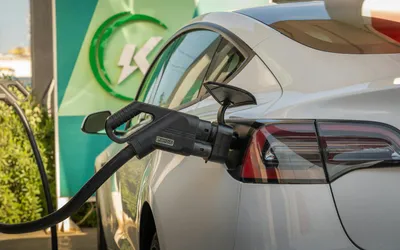
The biggest practical improvement for EV drivers in 2025 was the continued rollout of NACS (North American Charging Standard) access across non-Tesla vehicles. Ford, GM, Rivian, Hyundai, and others began delivering vehicles with native NACS ports or distributing adapters to existing owners. The result is that Tesla’s Supercharger network — the largest and most reliable fast-charging network in North America — became accessible to a much broader base of EV drivers.
This matters because charging infrastructure has been the bottleneck holding back EV adoption for people who can’t charge at home or who take regular road trips. CCS chargers from Electrify America and others improved their uptime through 2025, but Tesla’s network still leads in reliability and coverage. Opening that network to other brands is the single biggest quality-of-life improvement for EV owners this year.
The rollout wasn’t flawless. Some early adapter users reported intermittent connection issues, and not every Supercharger location was activated for non-Tesla vehicles immediately. But the trajectory is clear, and by mid-2025 the experience had stabilized enough that planning a cross-country EV road trip without worrying about charger brand compatibility became realistic.
ADAS got meaningfully better on mainstream cars
Advanced driver assistance systems aren’t new, but the refinement that happened in 2025 model year vehicles across brands like Hyundai, Toyota, Honda, and Ford moved the technology from “mostly useful” to “reliably good” for daily highway driving. Lane centering became smoother. Adaptive cruise control handled stop-and-go traffic with less jerky behavior. Automatic emergency braking responses got more accurate with fewer false positives.
GM’s Super Cruise expanded to more models and added automatic lane changes on compatible highways. Ford’s BlueCruise received updates that improved its ability to handle curves and construction zones. Hyundai and Kia’s Highway Driving Assist 2 became one of the better systems in the non-luxury space, handling highway merges and lane changes with reasonable confidence.
The important qualifier: none of these systems are autonomous. They’re assistance features that require an attentive driver. The marketing language around these systems remains annoyingly close to implying self-driving capability, and that gap between perception and reality still causes problems. Use them as intended — as tools that reduce fatigue on long highway drives — and they’re excellent.
In-car AI assistants: promising but unfinished
Several manufacturers introduced or expanded AI-powered voice assistants in 2025. BMW, Mercedes, and Volkswagen all rolled out systems that use large language models to handle more natural conversational commands. Instead of memorizing specific phrases, you can theoretically ask the car a question the way you’d ask a person.
In practice, these systems work well for simple tasks: adjusting climate, finding a nearby restaurant, playing a specific song. They stumble on multi-step requests, misinterpret accents more than they should, and occasionally offer confidently wrong answers to factual questions. The technology is directionally correct but not yet at the point where it replaces CarPlay or Android Auto for most people.
The more concerning trend is AI features tied to subscriptions. Mercedes’ MBUX assistant improvements and BMW’s Intelligent Personal Assistant enhancements both require active connected service plans. If your subscription lapses, the AI capability degrades to the basic system. That’s a hard sell for a feature that’s still finding its footing.
What to ignore: solid-state battery hype and autonomy timelines
Solid-state batteries got plenty of conference stage time in 2025. Toyota, Samsung SDI, and several startups announced progress toward production-ready solid-state cells that promise higher energy density, faster charging, and better cold-weather performance. The timelines remain optimistic to the point of being unreliable. We’ve been hearing “two to three years away” for about five years now.
This isn’t to say the technology won’t arrive. It will. But making purchase decisions today based on solid-state battery availability in 2027 or 2028 is premature. Buy or lease the EV that makes sense now with current battery technology, which is already quite good for most use cases.
Full self-driving timelines deserve similar skepticism. Tesla’s FSD (Supervised) continued to improve in 2025, and Waymo expanded its robotaxi service area. But the idea that you’ll buy a car next year and it will drive itself everywhere without supervision is still not grounded in the regulatory or technical reality. Plan for excellent driver assistance, not autonomy.
Charging network growth and reliability
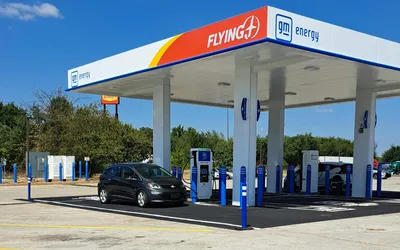
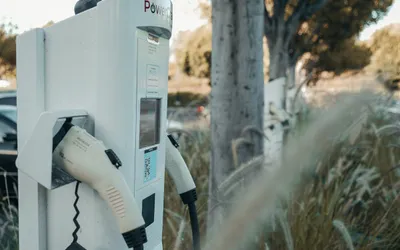
Beyond NACS, the overall charging infrastructure in North America grew substantially in 2025. The NEVI (National Electric Vehicle Infrastructure) federal program funded new stations along highway corridors, and private networks continued expanding. ChargePoint, EVgo, and Electrify America all added locations and worked on uptime — historically the weakest link in the non-Tesla charging experience.
The practical impact for drivers: more routes are now feasible for EVs that weren’t a year ago. Charging deserts — stretches of highway with no fast charger for 100+ miles — shrank noticeably in the eastern US and along major western corridors. Rural coverage still lags, but the gap is closing.
Reliability improvements mattered as much as new locations. A charger that exists but shows as “offline” when you arrive with 8% battery is worse than no charger at all. Industry-wide focus on uptime metrics and maintenance response times improved throughout the year, though there’s still work to do.
Helpful references
- Electrify America — Station Locator and Status
- IIHS — Vehicle Safety and ADAS Ratings
- Consumer Reports — Car Technology Reviews
Bottom line
The most useful automotive tech of 2025 wasn’t flashy — it was infrastructure access and incremental refinement of driver assistance. NACS adoption and better ADAS quietly made daily driving and road trips better for millions of owners. The AI assistants and solid-state battery promises will get there eventually, but they’re not reasons to change your buying plans today.