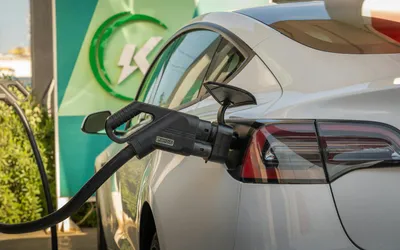

The NACS news in 2023 matters because charging standards are not abstract policy for EV shoppers—they shape where a car can charge, how many adapters it may need, and how confident an owner feels planning beyond home.
With Ford announcing a North American Charging Standard move in May 2023 and GM following in early June, buyers suddenly had a clearer sense that one connector path could influence the market more broadly.
Key takeaways
- NACS adoption news matters because charging access and simplicity matter to buyers.
- Ford and GM signaled in 2023 that major automakers were willing to shift direction.
- Adapter use and transition periods are part of the near-term reality.
- Charging confidence remains about network experience, not just plug shape.
- EV shoppers should pay attention without assuming every transition happens instantly.
Why the connector story matters
Charging standards affect the day-to-day usability of an EV. A simpler, broader, more convenient charging path can reduce one of the biggest hesitations shoppers still cite around going electric: confidence away from home.
That is why NACS became a real consumer story and not just an industry one.
What changed in 2023
Ford said in May 2023 that future EVs would adopt NACS and that existing customers would get adapter support, and GM announced a similar plan on June 8, 2023. Those moves suggested the charging-standard conversation had shifted from niche debate to major-market direction.
For shoppers, the practical takeaway was that charging access might become easier over time even if the transition would take a while.
What buyers should do with the news
Treat NACS adoption as an important signal, but not as permission to stop checking the details. Buyers still need to look at current charging access, the manufacturer’s adapter plan, route habits, and how the vehicle will fit their life now—not just after the market evolves further.
The future may be getting simpler, but the present still deserves a realistic read.
Helpful references
Bottom line
Automotive technology is easiest to judge when it is tied back to real ownership. If a feature improves safety, charging confidence, usability, or planning, it matters. If it only sounds futuristic, it probably needs a second look.
That filter helps readers separate genuine value from launch-week noise and makes the article age better over time.