Used EV prices have dropped significantly from their 2022–2023 peaks, and the inventory of off-lease and trade-in electric vehicles is growing fast. A 2021 Tesla Model 3 that traded hands for $38,000 two years ago now lists in the mid-$20,000 range. A 2022 Chevrolet Bolt EUV can be found under $18,000. But a used EV purchase involves questions that do not exist in the gas-car world: which charging plug does it have, will adapters work reliably, how much battery capacity remains, and does the warranty transfer to you?
Key takeaways
- Teslas built before mid-2025 use the Tesla connector (now called NACS); most other EVs from that era use CCS1 — adapters exist for both directions, but quality and availability vary.
- Battery degradation benchmarks: most modern EVs retain 85–95% of original capacity at 60,000 miles, but pack condition varies by climate, charging habits, and chemistry.
- The federal EV tax credit for used vehicles (up to $4,000) applies to qualifying purchases from dealers — not private sales — with income and price caps.
- Warranty transfer rules differ by manufacturer: Tesla’s warranty follows the car; some others (Nissan, Hyundai) have limitations on second-owner coverage.
- Home charging is the single biggest factor in daily EV livability — if you cannot charge at home, used EV ownership becomes significantly less convenient.
The charging plug situation, explained simply
For years, the North American EV market had a fragmented charging landscape. Tesla used its proprietary connector (now standardized as NACS — North American Charging Standard). Every other manufacturer used CCS1 (Combined Charging System). CHAdeMO existed on a few models (early Nissan Leafs, some Mitsubishi Outlander PHEVs) but is functionally dead for new vehicles.
Starting in late 2024 and through 2025, most major manufacturers announced adoption of NACS for new models. Ford, GM, Rivian, Hyundai, Kia, BMW, Mercedes, Volkswagen, and others have committed to native NACS ports on future vehicles. But the used market is full of CCS-equipped vehicles that will remain CCS for their entire service life.
What this means for used EV shoppers:
-
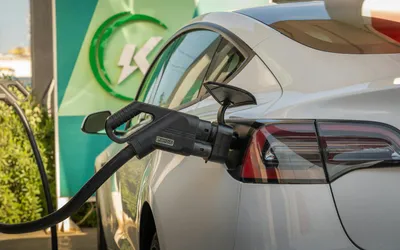
Used Teslas (pre-mid-2025): Native NACS port. Can charge at any Tesla Supercharger. Can use NACS-to-CCS adapters to charge at CCS stations, though this is rarely necessary since the Supercharger network is extensive. Tesla includes a small J1772 adapter for Level 2 home and destination charging.
-
Used non-Tesla EVs with CCS (2020–2024): These vehicles need a CCS-to-NACS adapter to use Tesla Supercharger stations. Ford and GM have distributed adapters to eligible owners, and several third-party adapters are available. Adapter quality matters — a well-made adapter from Lectron or the manufacturer’s own program typically handles full charging speeds. Cheap adapters may limit power or drop sessions.
-
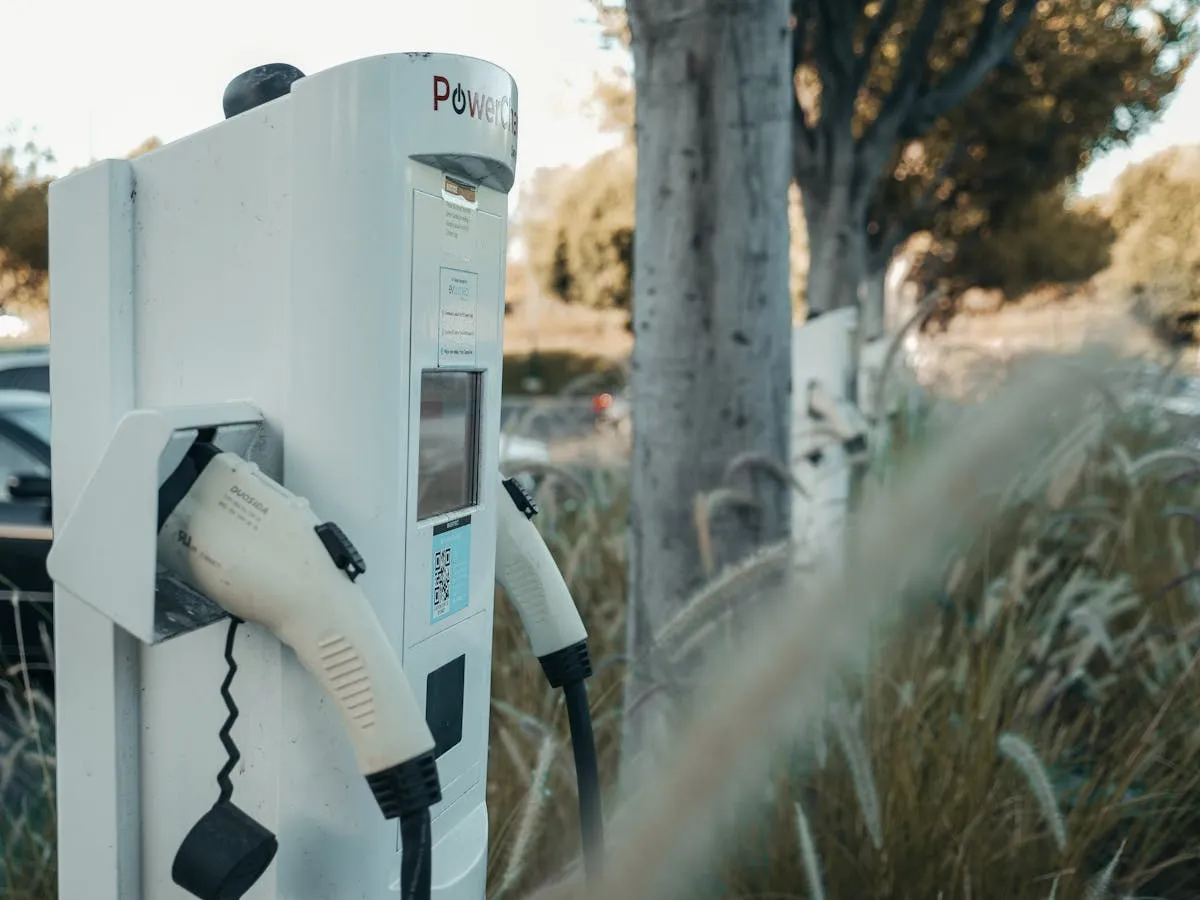
Used Nissan Leafs with CHAdeMO: DC fast charging options are shrinking as networks phase out CHAdeMO plugs. Level 2 charging still works everywhere via the standard J1772 port. If you buy a used Leaf, plan on Level 2 home charging as your primary method and consider CHAdeMO DC fast charging availability in your area before committing.
Battery degradation: what the numbers actually look like
Battery degradation is the used EV buyer’s biggest concern, and it is also the most misunderstood. Modern lithium-ion packs (LFP and NMC chemistries) are engineered for longevity, and real-world data from hundreds of thousands of vehicles shows that most retain far more capacity than early pessimists predicted.
Typical degradation benchmarks:
- Tesla Model 3/Y (NMC and LFP): Fleet data from sources like Recurrent Auto shows average retention of 90–94% at 60,000 miles and 87–92% at 100,000 miles. LFP packs (used in Standard Range models from 2021 onward) show slightly better long-term retention than NMC.
- Chevrolet Bolt EV/EUV: Despite the battery recall (all packs were replaced with new modules under warranty), post-replacement Bolts have essentially new batteries regardless of vehicle mileage. This makes a used Bolt an unusual value proposition.
- Hyundai Ioniq 5 / Kia EV6: SK On-supplied packs are showing 92–95% retention at 30,000–40,000 miles in early data. The 800V architecture and optimized thermal management help.
- Nissan Leaf: The exception. Leafs with passive air-cooled battery packs (all model years) degrade faster, especially in hot climates. A 2019 Leaf in Phoenix may show 75–80% capacity at 50,000 miles. A 2019 Leaf in Seattle might show 88%. Always check the battery health bars on the dash and request a capacity reading.
How to check before buying: Ask the dealer or seller for the vehicle’s battery health report. Tesla displays estimated degradation through the app. Many EVs can be checked with a third-party OBD scanner and an app like Recurrent (which provides a free battery health report for many models). For Leafs, the battery health bars on the instrument cluster give a rough but useful reading — 10 of 12 bars remaining means approximately 78–85% capacity.
Warranty transfer rules you need to verify
Not all EV warranties transfer equally to second owners:
- Tesla: The battery and drivetrain warranty (8 years / 100,000–150,000 miles depending on model) transfers fully to subsequent owners. This is one of Tesla’s strongest used-market advantages.
- Hyundai / Kia: The original 10-year / 100,000-mile powertrain warranty reduces to 5 years / 60,000 miles for second owners on many models. The separate 10-year battery warranty may or may not transfer at full term — check the specific model year’s warranty documentation.
- Ford Mustang Mach-E / F-150 Lightning: The 8-year / 100,000-mile battery warranty transfers to subsequent owners.
- Chevrolet Bolt: The 8-year / 100,000-mile battery warranty transfers, and recalled vehicles received new battery packs with a separate 8-year warranty starting from the replacement date.
- Nissan Leaf: The 8-year / 100,000-mile battery capacity warranty (guaranteeing a certain number of health bars) transfers to subsequent owners.
Always verify warranty status using the VIN through the manufacturer’s website or by calling their customer service line before purchasing. A 2021 EV with 45,000 miles may still have substantial warranty remaining — or it may have had warranty-voiding modifications.
The used EV tax credit and how to qualify
The federal used EV tax credit, established under the Inflation Reduction Act, offers up to $4,000 for qualifying used EV purchases. Key requirements:
- The vehicle must be purchased from a licensed dealer, not a private party.
- Sale price must be $25,000 or less.
- The vehicle must be at least two model years old.
- Buyer income limits apply: $75,000 AGI for single filers, $150,000 for joint filers.
- The credit can be applied as a point-of-sale discount at participating dealers, reducing the purchase price immediately rather than waiting for a tax refund.
This credit makes vehicles like the Chevrolet Bolt EV/EUV, Nissan Leaf, early Model 3 Standard Range, and Volkswagen ID.4 particularly attractive in the sub-$25,000 used market. Verify dealer participation before assuming the point-of-sale transfer is available — not all dealers have enrolled in the program.
Home charging is the make-or-break factor
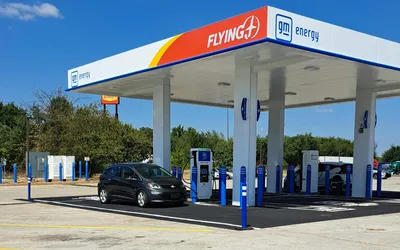
Public charging infrastructure has improved dramatically, but relying on it as your primary charging method is a fundamentally different (and less convenient) ownership experience than plugging in at home every night. A home Level 2 charger (240V, 32–48 amps) adds 25–40 miles of range per hour, meaning an overnight charge fully replenishes any daily driving pattern.
If you own your home, installing a Level 2 EVSE costs $300–800 for the unit plus $200–500 for electrical work (assuming your panel has capacity). If you rent or park on the street, your options narrow to Level 1 trickle charging (120V outlet, adding 3–5 miles per hour — enough for short commutes but marginal for anything else) or reliance on public charging and workplace charging.
Be honest about your situation. A used EV at an attractive price is not a good deal if charging logistics turn your daily routine into a planning exercise. If home charging is available, a used EV is one of the lowest-cost-per-mile vehicles you can own. If it is not, the convenience gap is real and should factor into your decision. While you’re evaluating the charging question, also check whether the model supports V2L or vehicle-to-home power — on some used EVs, the car can run your appliances, not just the other way around.
Models worth watching in the used market right now
- 2021–2023 Chevrolet Bolt EUV ($15,000–20,000): Replaced batteries, 259 miles of range, one-pedal driving, and Super Cruise availability on Premier trim. The value proposition is hard to beat.
- 2021–2022 Tesla Model 3 Standard Range Plus ($22,000–28,000): Supercharger network access, strong resale data, and transferable warranty make it the default used EV recommendation.
- 2022–2023 Hyundai Ioniq 5 ($25,000–32,000): 800V architecture, fast charging speeds, and a spacious interior. Pricing is dropping as lease returns hit the market.
- 2020–2022 Volkswagen ID.4 ($18,000–24,000): Practical crossover size, decent range (250+ miles), and improving software (early models had rough infotainment that has been updated via OTA).
Helpful references
Bottom line
Used EVs offer genuine value in 2026, especially with federal tax credits and falling prices. But the smart play is doing your homework on charging compatibility, battery health, and warranty transfer before signing. A used EV with home charging and a healthy pack is one of the cheapest cars to operate on the road. Without those fundamentals, the savings evaporate.