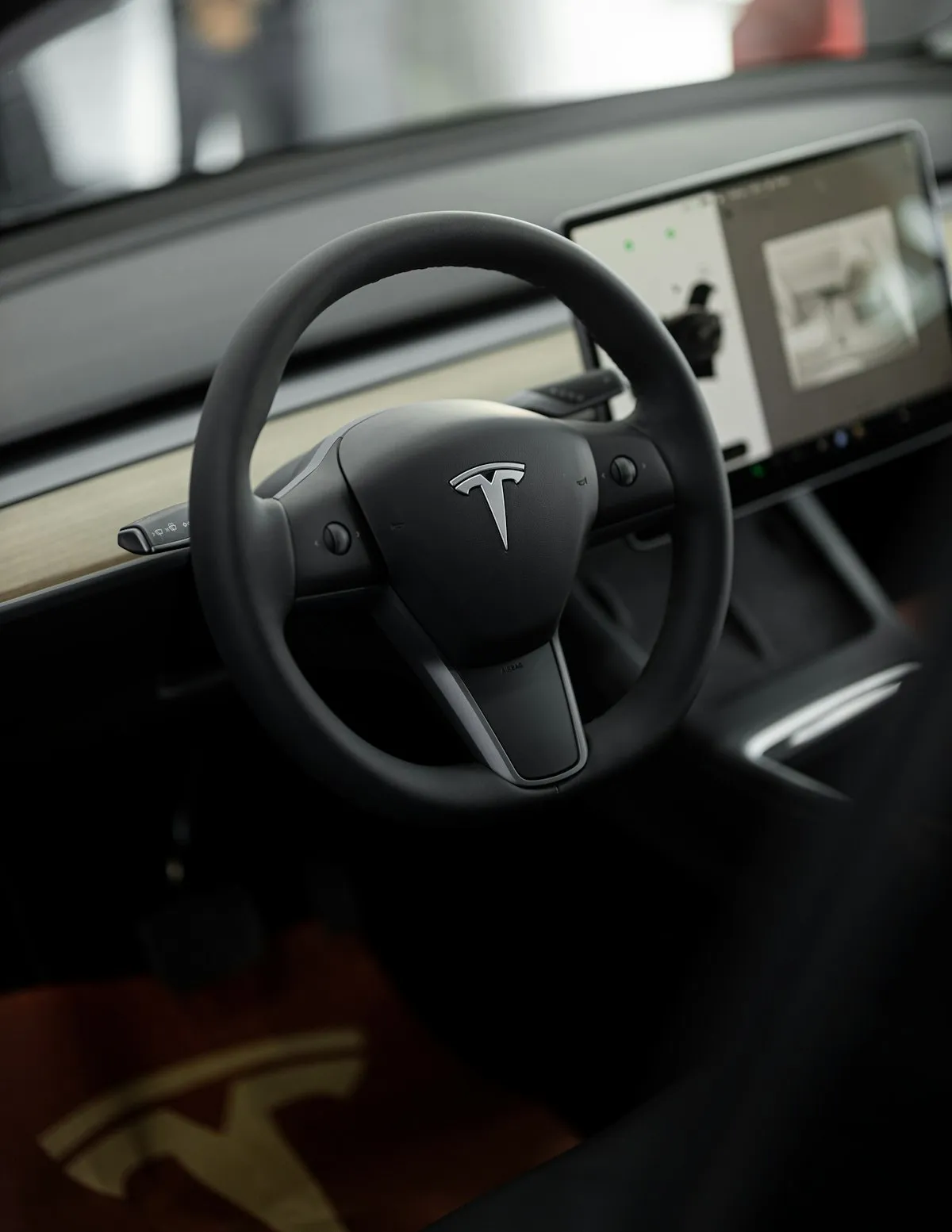
Super Cruise is the most road-restricted of these three systems, but GM publishes the largest compatible-road figure. BlueCruise is also a mapped-highway system and is offered across several Ford and Lincoln models. Tesla’s FSD (Supervised) attempts the broadest range of driving, including city streets, but Tesla still requires the driver to watch the road and be ready to intervene.
That is the useful comparison for a buyer in 2026: where each system is designed to work, how it watches the driver, and what its manufacturer promises. There is not enough comparable public data to name a safety winner.
Safety note: These are Level 2 driver-assistance systems, not autonomous vehicles. NHTSA says the driver remains responsible when a Level 2 system controls steering and speed. Keep watching the road and be ready to brake or steer immediately. Features and eligible roads can change by vehicle, hardware, region, and software version.
Key takeaways
- Super Cruise and BlueCruise permit hands-off driving only on compatible mapped roads; FSD (Supervised) is intended for a wider variety of roads.
- GM says Super Cruise works on about 750,000 miles of compatible roads in the United States and Canada. Ford says its Blue Zones cover more than 130,000 miles of North American roads. Those figures use different definitions and should not be treated as a controlled test.
- All three use a driver-facing camera for attention monitoring in current implementations, although the exact hardware and alerts vary by model and software version.
- FSD (Supervised) is the subject of an open NHTSA Engineering Analysis into degraded-visibility detection. An open investigation is not a finding that every vehicle has a defect or that a recall is required.
- Public crash-report counts cannot establish a safety ranking because NHTSA says the data are not normalized for fleet size, miles driven, or operating conditions.
How we evaluated the systems
This comparison was updated on August 11, 2026. It is a document-based review, not a Chariotz road test. We compared current manufacturer descriptions, owner guidance, compatible-road claims, driver-monitoring requirements, and open NHTSA actions. We did not convert manufacturer-reported miles or crash counts into safety rates.
That last limitation matters. NHTSA’s Standing General Order data page says Level 2 crash reports are not normalized by vehicle count or miles traveled and that manufacturers have different access to telemetry. Raw report totals therefore cannot support a fair brand-to-brand safety ranking.
Side-by-Side Comparison
| Feature | Super Cruise | BlueCruise | Tesla FSD (Supervised) |
|---|---|---|---|
| Approach | Pre-mapped highways only | Pre-mapped highways only | Camera-driven, broader operational domain |
| Published road coverage | About 750,000 compatible miles (US/Canada) | More than 130,000 Blue Zone miles (North America) | No published mapped-road limit; availability still depends on vehicle and conditions |
| Hands-off operation | Yes, on compatible mapped roads | Yes, on compatible mapped roads | Not marketed as a mapped-road hands-off system; the owner manual may still prompt steering-wheel force |
| Driver monitoring | Driver-facing camera tracks attention | Driver-facing camera tracks eye gaze and head position | Cabin camera monitors attentiveness |
| Automated lane changes | Yes, on mapped roads | Yes, on mapped roads | Yes, broader conditions |
| Subscription | Terms vary by vehicle and trial | Terms vary by vehicle and trial | New access is subscription-based; legacy purchased access may remain with an eligible vehicle |
| Vehicle availability | GM only (Cadillac, Chevy, GMC, Buick) | Wide Ford / Lincoln lineup | Tesla only |
| Intended road use | Compatible mapped roads | Prequalified divided highways | Highways, residential roads, and city streets, subject to limitations |
| Software caveat | Capability varies by vehicle and version | Features vary by vehicle and BlueCruise version | Behavior and availability vary by hardware and software version |
| Regulatory item reviewed | No comparative rate assigned | No comparative rate assigned | Open NHTSA Engineering Analysis EA26002 |
Super Cruise in 2026
GM’s Super Cruise uses compatible-road mapping plus vehicle cameras and sensors. GM’s published network figure is about 750,000 miles across the United States and Canada. That does not mean every Super Cruise vehicle can use every mapped mile; GM tells owners to check their vehicle’s compatibility and map.
The boundary is easy to understand: hands-off operation is limited to compatible roads and conditions. The driver-facing camera checks whether the driver is looking at the road, and the system issues alerts if attention is lost.
Super Cruise fits a driver whose recurring routes appear on GM’s current map and who wants hands-off assistance within that defined road network. A buyer should confirm the exact model, trim, trial period, subscription terms, and regular routes before treating the feature as a deciding factor.
BlueCruise in 2026
Ford describes BlueCruise as hands-off, eyes-on assistance for prequalified sections of divided highway called Blue Zones. Ford currently says those zones cover more than 130,000 miles of North American roads, or 97 percent of controlled-access highways in the United States and Canada.
Current versions can include lane-change assistance, automatic lane changes, and in-lane repositioning, but not every feature is available on every vehicle. The driver-facing camera tracks eye gaze and head position. Ford also warns that rain, fog, snow, unclear lane markings, or other visibility problems can reduce performance or make the feature unavailable.
BlueCruise is a practical candidate when the Ford or Lincoln vehicle is already the better fit and the owner’s regular routes are Blue Zones. Check the specific vehicle’s hardware, installed BlueCruise version, subscription status, and map rather than relying on a model-family advertisement.
FSD (Supervised) in 2026
Tesla describes FSD (Supervised) as an assistance package that can follow a route, change lanes, turn, negotiate intersections and roundabouts, and enter or exit highways. Tesla also states that these features do not make the vehicle autonomous or replace the driver. Its owner guidance requires the driver to remain attentive and ready to take over.
NHTSA opened Engineering Analysis EA26002 on March 18, 2026. The agency is evaluating how FSD detects degraded roadway visibility and whether it gives the driver enough warning. The investigation covers an estimated 3,203,754 vehicles and was still open when this article was updated. It is evidence of an unresolved regulatory question, not a completed defect finding.
FSD (Supervised) is the broadest choice by intended road type, but that breadth raises the number of situations a driver must supervise. Tesla’s manual specifically calls out construction zones, complex intersections, narrow roads, obscured cameras, poor visibility, and faded lane markings among conditions that can require intervention or limit performance.
Driver attention monitoring
All three current systems use an interior camera to monitor driver attention. That shared fact does not make their alert logic identical, and it does not remove the driver’s duty to supervise.
A short demonstration drive can still answer useful comfort questions: Can the camera see your eyes with your normal seating position and eyewear? Are alerts clear? Can you disengage smoothly? Does the system remain available on the roads you actually drive? Those observations are more useful than an unsupported internet ranking of attention-monitoring quality.
Practical buying guidance
The decision framework for choosing between these systems:
- Regular routes appear on GM’s compatible-road map and you prefer a clearly bounded hands-off domain: consider Super Cruise.
- You already prefer a supported Ford or Lincoln and your routes are Blue Zones: consider BlueCruise.
- You want assistance on city streets as well as highways and accept a broader supervision burden: consider FSD (Supervised).
- You cannot verify coverage or subscription status for the exact vehicle: do not pay extra until you can.
No single system is best for every buyer. Match the system to your actual routes, exact vehicle, and willingness to supervise. A dealer demonstration on a known compatible route is more informative than a staged video.
Bottom line
Super Cruise and BlueCruise are mapped-road, hands-off systems with different published coverage definitions. FSD (Supervised) is intended for a wider variety of roads but remains supervised. None removes the driver’s responsibility.
The defensible 2026 conclusion is about fit, not a universal winner: verify the exact car, current software, subscription, and route coverage, then test the controls with your hands ready and eyes on the road.
Primary sources
- NHTSA: Driver Assistance Technologies
- NHTSA: Standing General Order crash data and limitations
- General Motors: Super Cruise compatible-road expansion
- Ford: BlueCruise features, coverage, pricing, and limitations
- Tesla: Full Self-Driving (Supervised) support
- NHTSA: Engineering Analysis EA26002