Every January, predictions flood the internet about flying cars, robotaxi fleets, and fully autonomous highways. Most of that noise fades by March. The trends that actually matter in 2025 are quieter but more useful: charging that works when you need it, electrified options that fit normal budgets, driver-assist systems that feel less annoying, and cabin tech that solves real problems instead of creating new ones.
Key takeaways
- EV charging reliability and speed are improving faster than vehicle range numbers
- Affordable electrified vehicles (hybrids and sub-$35K EVs) will move more metal than luxury flagships
- ADAS features are getting refined for daily-driver comfort, not just highway demos
- Cabin tech is shifting toward integration and simplicity over screen count
- Right-to-repair momentum and OBD access remain worth watching for DIY owners
Charging infrastructure is the real EV bottleneck — and it is improving
Range anxiety gets the headlines, but charging frustration is what actually keeps people from buying EVs. A 300-mile battery does not help much if the fast charger at your highway stop is broken, occupied, or throttled to a crawl.
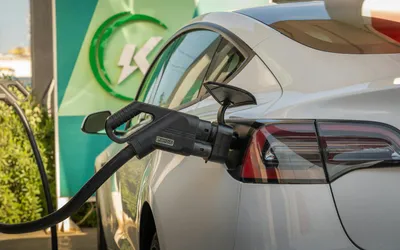
The good news heading into 2025 is that the major networks are investing heavily in uptime and expansion. Tesla has opened thousands of Supercharger stalls to non-Tesla vehicles through adapters and the NACS connector standard, which most major automakers have now adopted for upcoming models. That means fewer proprietary guessing games and more stations that work across brands.
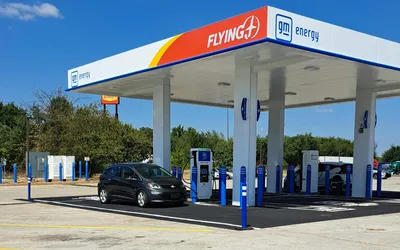
ChargePoint, Electrify America, and EVgo are all under pressure — from customers, regulators, and federal NEVI funding requirements — to hit reliability benchmarks before money flows. Stations that sit broken for weeks are becoming a liability, not just an inconvenience. If the network operators deliver on these commitments through 2025, the day-to-day experience of owning an EV gets meaningfully better without any battery breakthrough required.
Affordable electrification matters more than flagship specs
The Chevrolet Equinox EV, starting around $33,000, represents a more important shift than any six-figure electric sedan. So does the refreshed Hyundai Kona Electric, the upcoming Kia EV3, and the growing plug-in hybrid lineup from Toyota and Honda. These are vehicles that regular buyers cross-shop against Rav4s and CR-Vs.
Plug-in hybrids are also making a quiet comeback. Toyota’s approach with the RAV4 Prime and the new Prius Prime — offering 40-plus miles of electric range with a gas backup — makes sense for buyers who want to electrify their commute without rethinking their road trip habits. Expect more PHEVs from brands that initially went all-in on pure electric and are now hedging.
The bottom line for 2025: electrification stops being a premium-only story. If you are shopping for a new car this year and your budget is $30K to $45K, you will have meaningfully more electrified choices than you did twelve months ago.
Driver-assist systems are learning to be less irritating
Advanced driver-assistance systems (ADAS) have a perception problem. Lane-keep assist that ping-pongs between lane markings, adaptive cruise control that panic-brakes for overhead signs, and blind-spot alerts that cry wolf every time a car passes three lanes over — these drive owners to disable the systems entirely.
Automakers are starting to address this. GM’s Super Cruise and Ford’s BlueCruise continue to expand to more models and more mapped highway miles, offering hands-free driving that actually works in a defined context rather than pretending to work everywhere. Hyundai and Kia’s Highway Driving Assist 2 is similarly pragmatic about its limits.
The trend worth watching is not “Level 5 autonomy by 2025” (it will not happen). It is calibration improvements that make existing Level 2 systems feel less like a nervous passenger and more like a competent co-pilot. If your current car’s lane centering annoys you, test-drive a 2025 model — the gap between good and bad implementations is widening fast.
Cabin tech is consolidating around fewer, better screens
The automotive industry spent the last five years stuffing dashboards with screens. Now the pendulum is swinging toward making those screens actually useful. Apple CarPlay and Android Auto remain the default interface for most drivers, and wireless versions are finally standard on most new vehicles rather than a $2,000 package add-on.
Head-up displays are trickling down from luxury models into mainstream vehicles, putting speed and navigation info where your eyes already are. Meanwhile, automakers like Rivian and Porsche are investing in software that boots faster, responds to inputs without lag, and handles over-the-air updates without bricking your climate controls.
Physical controls are also making a partial comeback. Hyundai put real buttons back on the steering wheel of the 2025 Tucson after touch-capacitive buttons drew complaints. BMW kept its iDrive controller alongside the touchscreen. Drivers want tech that works on the first try, not tech that looks clean in a press photo.
Right-to-repair and OBD access: the sleeper issue
As vehicles get more software-dependent, the question of who can diagnose and fix them gets louder. Massachusetts passed a right-to-repair law covering telematics data, and the aftermarket industry through SEMA and the Auto Care Association continues to push for OBD port access as automakers explore locking down diagnostic tools.
For DIY owners and independent shops, this is a practical concern. If your OBD-II scanner cannot read the codes your car throws because the manufacturer gated them behind a dealer subscription, your ability to maintain your own vehicle shrinks. In 2025, pay attention to which brands are opening up diagnostic access and which are walling it off — it could influence your next purchase decision.
Helpful references
- U.S. Department of Energy Alternative Fuels Station Locator — find charging stations and track network growth near you
- IIHS Vehicle Safety Ratings — compare ADAS features and crash-test performance across 2025 models
- Consumer Reports New Car Reliability Ratings — track which brands and models hold up over time
Bottom line
The 2025 trends that will actually change your ownership experience are not flashy — they are chargers that work, EVs you can afford, driver-assist systems that do not fight you, and software that respects your time. Skip the hype cycle and pay attention to the stuff that makes your daily drive better.