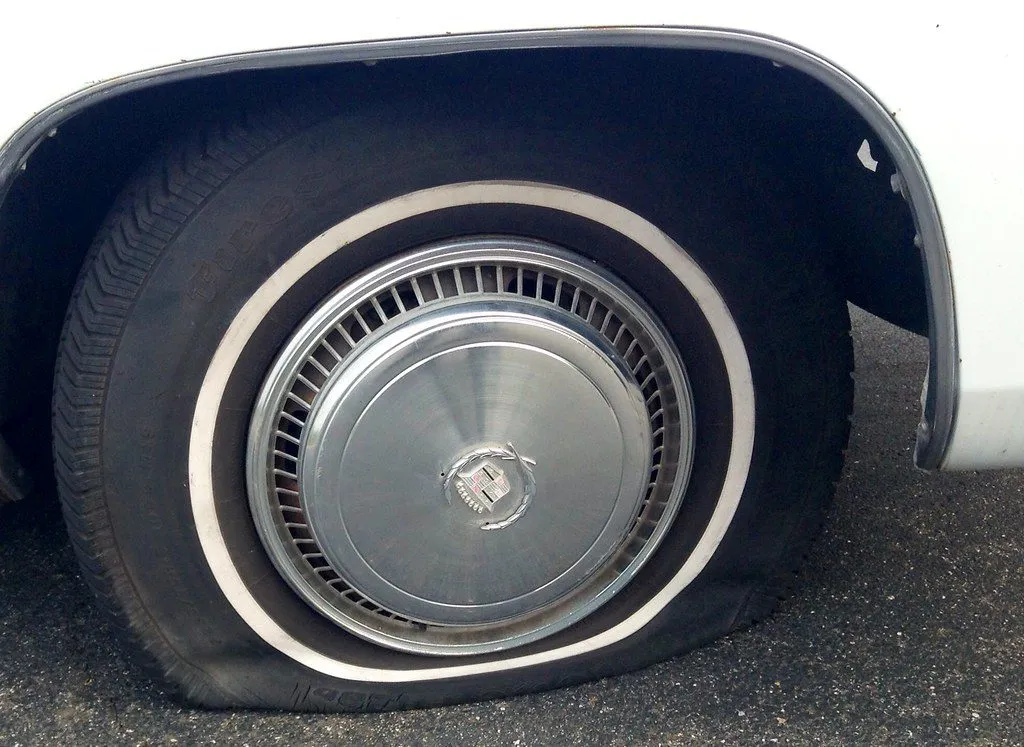
When the low tire pressure light comes on, the most useful thing to know first is whether to keep driving, pull over now, or wait until you can find a gauge.
The short version: slow down and stop at the first safe place where you can inspect and measure the tires. If the car pulls, vibrates, thumps, or a tire looks visibly low, stop driving and use a spare or roadside assistance. Do not assume a tire is safe because the warning is steady or the car still tracks straight.
How we checked this guidance
This article was updated August 11, 2026 using NHTSA tire-pressure guidance, the federal TPMS threshold, U.S. Tire Manufacturers Association repair criteria, and tire-maker temperature guidance. It cannot diagnose a tire remotely. The vehicle placard, owner’s manual, and tire manufacturer’s service policy control for your car and tire.
The decision order is deliberate: first look for symptoms that make continued driving unsafe, then measure pressure, then decide whether inflation, professional inspection, repair, or replacement is appropriate.
What the TPMS Light Actually Means
Federal TPMS rules require a warning when one or more tires is significantly underinflated, generally at 25 percent or more below the vehicle’s placard pressure, subject to the standard’s minimum-pressure provisions. The light is not an early-warning substitute for monthly checks.
The system itself comes in two varieties:
- Direct TPMS — each wheel has a sensor in the valve stem that reports actual pressure. Most modern cars use this.
- Indirect TPMS — the car infers low pressure from wheel-speed differences (a low tire spins slightly faster). Less precise, and the system can be fooled.
Either way, treat a TPMS light as a prompt to slow down, inspect, and measure pressure at the first safe opportunity. NHTSA notes that TPMS warns only after significant underinflation, so a normal-looking tire still needs a gauge.
Quick Decision Table
| Situation | What It Usually Means | What To Do |
|---|---|---|
| TPMS light after a cold night | Cold air contracted, pressure dropped a few psi | Check pressure when tires are cold; top up to placard if low |
| TPMS light, one tire visibly lower than others | Possible leak or damage | Stop safely, inspect and measure it; use a spare or roadside help if it will not hold placard pressure or shows damage |
| TPMS light, all four down a few psi | Seasonal pressure drop | Inflate all four to placard pressure |
| Tire visibly flat | Severe leak or blowout | Pull over safely; do not drive on it |
| Pulling, thumping, or flapping | Sidewall damage or fully flat | Pull over immediately, swap to spare or call for help |
| TPMS light after new tires or rotation | Sensors not relearned | Reset or relearn TPMS per owner’s manual |
| Run-flat tire showing TPMS warning | The tire may have limited mobility, but limits vary | Follow the exact tire and vehicle manual for speed and distance; stop if handling changes |
Cold Weather Pressure Drops Are Normal
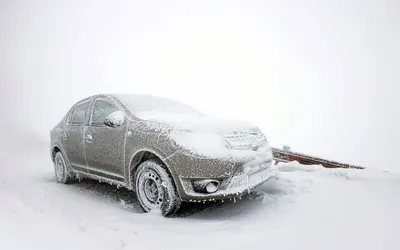
As a rule of thumb, pressure changes by about 1 psi for each 10°F change in ambient temperature. Michelin publishes the same temperature guideline. A seasonal pressure drop can trigger TPMS without a puncture, but measure all four tires before assuming weather is the only cause.
The fix is to inflate to placard pressure with the tires cold. The “cold” reading is what the placard refers to. NHTSA defines cold for this check as parked for at least three hours. If you must add air while a tire is warm, follow the owner’s manual and recheck it cold rather than bleeding a warm tire down to the cold number.
A seasonal temperature change may be the whole explanation, but recheck the pressure after inflation. Continued loss points to a leak, not just colder air.
How To Check and Inflate a Tire
You need:
- A reliable tire-pressure gauge you know how to read
- A 12V air compressor or access to a station compressor
- The placard pressure for your car — sticker on the driver door jamb
Steps:
- Check pressure cold, before driving, or after the car has sat at least three hours
- Unscrew the valve stem cap and press the gauge firmly onto the valve to get a reading
- Compare to placard pressure — not the tire sidewall number, which is the maximum and not the recommendation
- Add air in short bursts and re-check between each
- Replace the valve cap when done
Use the front pressure on the front tires and the rear pressure on the rear tires if the placard lists different numbers. Many vehicles spec a lower pressure for the rear axle on light-duty driving and a higher pressure with a full load.
Suspecting a Leak
If one tire keeps losing air faster than the others, treat it as a leak even if the car drives normally. Common possibilities include:
- Nail or screw puncture in the tread
- Valve stem leak — usually a hissing sound or a slow weekly drop
- Wheel-and-tire bead leak — the seal between the wheel and the tire
- Bent or cracked wheel — usually after a pothole strike
- Age-related rubber cracking or damage — follow the tire and vehicle makers’ inspection and replacement guidance
Soapy water can reveal some valve, bead, or puncture leaks when bubbles form, but it does not establish that the tire is safe or repairable. Do not pull out an embedded object. A tire that is visibly low, damaged, or losing air quickly needs a safe stop and professional inspection.
USTMA’s passenger-tire repair guidance limits repair consideration to the tread area and punctures no larger than 1/4 inch (6 mm). It requires removing the tire for internal inspection and using both a rubber stem and inner-liner patch; a plug alone is not an acceptable permanent repair. The tire maker may impose tighter limits.
TPMS Reset After New Tires or a Rotation
Some TPMS designs must relearn sensor IDs or wheel locations after tire service, rotation, or sensor replacement. Others relearn automatically or do not display tire location. Use the procedure for the exact vehicle.
Three common relearn methods:
- Automatic — the system relearns after the driving pattern specified in the owner’s manual
- Manual reset — usually a button or menu setting in the dashboard
- Scan tool — the tire shop activates each sensor with a programmer
The owner’s manual covers the specific method for your car. If correct pressures and the specified relearn do not clear the warning, have the system diagnosed. Direct TPMS sensors use internal batteries, but service life varies.
Run-Flat Caveats
Run-flat tires are designed to provide limited mobility after pressure loss. They are not permission to continue at normal speed or indefinitely, and repair eligibility depends on the tire maker’s policy and whether the tire was driven underinflated.
When the TPMS light comes on with run-flats:
- Follow the speed and distance shown in the vehicle and tire documentation
- Use only the remaining mobility needed to reach a safe inspection point
- Do not assume the tire is repairable; disclose how far and how fast it was driven without pressure
Many vehicles equipped with run-flats do not include a spare. If you switch to standard tires, confirm that you have a usable spare, a vehicle-approved sealant/inflator plan, or roadside coverage before a long trip.
When to Stop and Call for Help
Some signs are not safe to drive on:
- Sidewall damage, including bulges, cuts, or gouges
- Tire fully flat with the wheel sitting on the rubber
- Pulling hard to one side at low speeds
- Vibrations strong enough to feel through the steering wheel
Continuing in these situations damages the wheel, can affect steering and suspension, and risks a blowout at speed.
Roadside assistance can install a usable spare or tow the vehicle. Before a long trip, confirm whether your car carries a spare, sealant kit, inflator, or run-flat tires and check the relevant instructions.
Primary sources
- NHTSA TireWise: pressure, placard, cold checks, and TPMS
- NHTSA interpretation of the federal 25-percent TPMS threshold
- U.S. Tire Manufacturers Association: tire repair basics
- Michelin: pressure change with ambient temperature
Keep reading on Chariotz
- UTQG Ratings Explained: Treadwear, Traction, Temperature
- Run-Flats vs Standard Tires in 2026: When the Run-Flat Tax Is Worth It
- Cold Weather Fuel Economy, Tire Pressure, and Warm-Up Myths
- Compact Air Compressors and Tire Repair Tools for Everyday Emergencies
- Spring Alignment and Tire Wear: What Your Tread Is Telling You
- All-Season, All-Weather, or Winter-Ready: Matching Tires to Climate