Everyone wants to bolt on an intake and a tune first. Nobody at the car meet brags about fresh brake fluid. But here’s the thing — better brakes make a car feel faster in daily driving more than 20 extra horsepower ever will. Confidence under braking changes how you drive the car, how late you can carry speed, and how much you trust the machine when something unexpected happens.
Key takeaways
- Fresh DOT 4 brake fluid is the cheapest and most impactful brake upgrade you can do
- Upgraded pads with better compounds improve feel, fade resistance, and dust without changing hardware
- Stainless steel brake lines eliminate the spongy pedal feel of aging rubber lines
- Better tires are technically a brake upgrade — more grip means shorter stopping distances
- Big brake kits are rarely necessary for street-driven cars unless you’re adding serious power or tracking it
Start with brake fluid
Brake fluid is hygroscopic — it absorbs moisture from the air through microscopic pores in rubber hoses and seals. Over time, that moisture lowers the fluid’s boiling point. When brake fluid boils, you get vapor in the lines, and vapor compresses. That’s what pedal fade feels like: you push the pedal and it goes soft because you’re compressing gas instead of pushing fluid.
Most factory-fill brake fluid is DOT 3, with a dry boiling point around 401°F. A full flush with quality DOT 4 fluid raises that to 446°F or higher, depending on the brand. ATE Typ 200, Motul DOT 4, and Castrol SRF are well-regarded options with progressively higher boiling points and price tags.
A brake fluid flush on most cars is a 30- to 45-minute job with a helper or a one-person bleeder valve. It costs about $20 to $30 in fluid and should be done every two years regardless of mileage. If your brake fluid is dark or you can’t remember when it was last changed, this is your first move.
Upgrade the pads
Factory brake pads are designed for a balance of noise, dust, wear life, and stopping power. That balance usually prioritizes quiet, low-dust operation over outright performance. Upgrading to a better compound shifts that balance toward more bite and better fade resistance, with trade-offs in dust and sometimes noise.
For a street-driven car that sees occasional spirited driving, a performance street pad is the sweet spot. Brands like Hawk HPS, StopTech Street Performance, and EBC Redstuff are designed to work well from cold — unlike dedicated track pads that need heat to grip — while offering meaningfully better fade resistance than OEM pads.
The key metric to look at is the pad’s operating temperature range. Street pads work from ambient temperature up to about 600°F to 800°F. Track pads often don’t grip well below 300°F, which means they’re dangerous in normal street driving. Stick with pads designed for street operating temperatures unless you’re doing regular track days.
When you install new pads, follow the bedding procedure. This usually involves a series of moderate stops from 35 mph followed by a cooldown period. Proper bedding transfers an even layer of pad material onto the rotor surface, which is what creates consistent, even braking. Skip this step and you’ll get uneven deposits, judder, and reduced pad life.
Replace rubber brake lines with stainless steel
Factory rubber brake lines expand slightly under pressure, especially as they age. This expansion absorbs some of the hydraulic force you’re applying with the pedal, resulting in a softer, less precise pedal feel. Stainless steel braided lines don’t expand, so the pedal feels firmer and more linear.
The difference is subtle on a car with fresh rubber lines but pronounced on a car with lines that are 8 to 15 years old. If you’ve never replaced your brake lines and the car is more than a decade old, stainless lines are both a performance upgrade and a maintenance item.
Goodridge, StopTech, and Russell all make DOT-approved stainless steel line kits for most popular vehicles. Installation is straightforward — you’re swapping line for line — but you’ll need to bleed the system afterward. Many people combine this with the fluid flush mentioned above, which makes sense since you’re opening the system anyway.
Tires are your most important braking component
This gets overlooked in brake upgrade discussions, but your tires are the final link between the car and the road. The best brakes in the world can’t stop the car faster than the tires can grip. A set of quality summer or max-performance all-season tires will reduce stopping distances more than any pad or rotor swap.
If you’re running the cheapest all-season tires you could find, upgrading to a set of Continental ExtremeContact DWS06 Plus, Michelin Pilot Sport All Season 4, or equivalent tires will transform braking feel. The improvement in wet braking alone is significant — cheap tires can add 20 to 30 feet to a panic stop from 60 mph compared to a quality tire.
This is why experienced builders upgrade tires before adding horsepower. More grip means you can use the power you already have more effectively, and you can stop the car with more confidence in every situation.
When a big brake kit actually makes sense
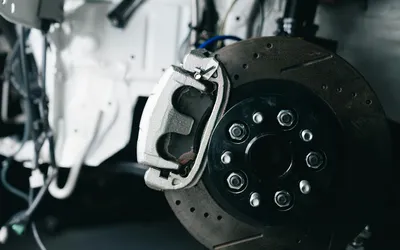
Big brake kits — larger rotors, multi-piston calipers, upgraded brackets — are the flashy brake upgrade, and they do work. Larger rotors have more thermal mass, so they absorb heat better during repeated hard stops. Multi-piston calipers distribute clamping force more evenly across the pad surface.
But for a street-driven car making stock or mildly modified power, a big brake kit is usually overkill. The factory brake system on most modern cars is engineered with significant margin for street use. Fluid, pads, lines, and tires address the weak points in a stock system without the cost and complexity of a BBK.
Where big brake kits shine is on cars making serious power — 400-plus horsepower on a car designed around 250 — or cars that see regular track days where sustained high-speed braking generates heat beyond what stock rotors can manage. If you’re building a street/track dual-purpose car, budget for a BBK. If you’re building a fun daily driver, spend the BBK money on better tires and suspension instead.
Helpful references
- CARB aftermarket parts — emissions compliance for California-registered vehicles
- SEMA Garage — aftermarket parts testing and certification
Bottom line
Better brakes don’t just make the car safer — they make it more fun. When you trust your ability to scrub speed quickly and consistently, you drive the car harder and enjoy it more. Start with fluid, add pads and lines, upgrade the tires, and save the big brake kit for when you actually need it.