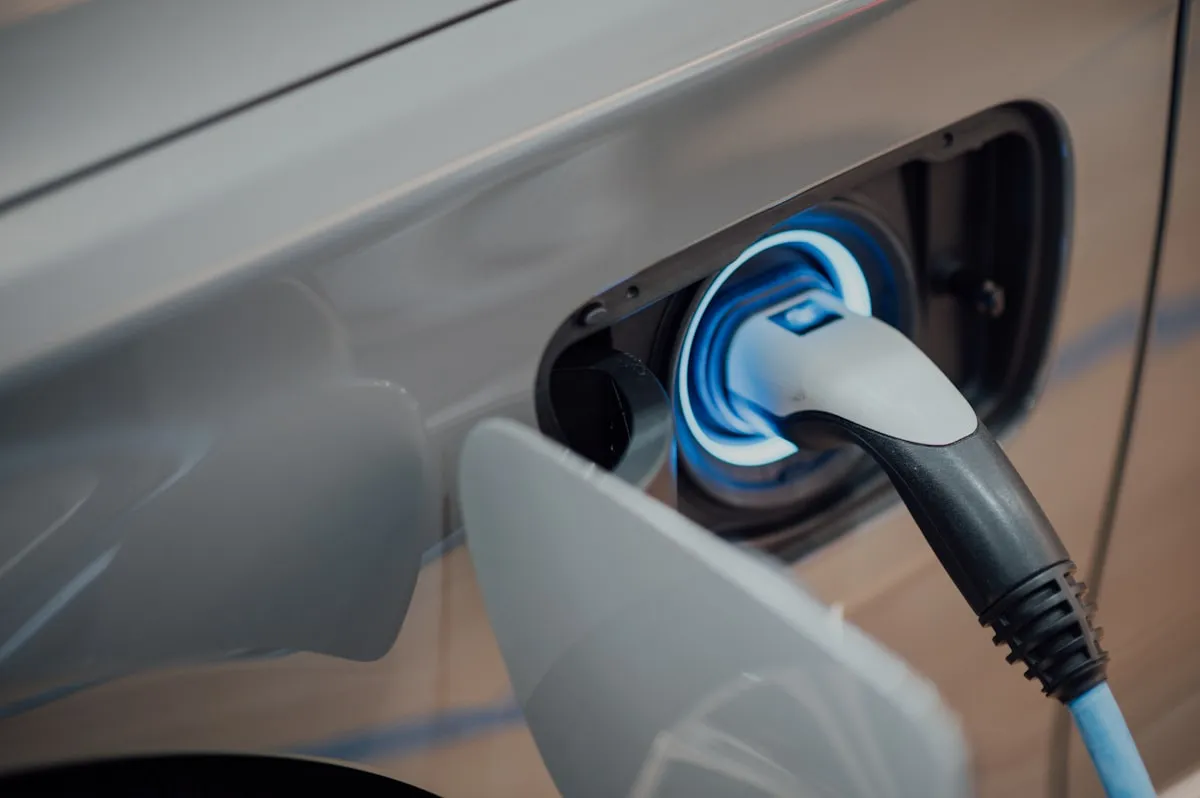
EV road trips in 2025 are more practical than they have ever been, but they still require more planning than pulling into a gas station. The difference between a smooth trip and a frustrating one usually comes down to three things: knowing your car’s real-world range, understanding how charging curves work, and having backup stops mapped before you leave.
Key takeaways
- Use A Better Route Planner (ABRP) or your car’s built-in planner for route-specific charging stops.
- Charging speed drops significantly above 80% state of charge — plan your stops around the fast part of the curve.
- NACS (Tesla connector) availability is expanding to non-Tesla EVs, but adapter access and activation vary by location.
- Always identify at least one backup charger at each stop in case your primary choice is down or occupied.
- Real-world range depends on speed, temperature, elevation, and cargo — plan for 15-20% less than the EPA estimate.
Route planning apps are non-negotiable
Your car’s navigation system may include a built-in charging planner, and if it does, start there. Tesla’s in-car routing is the benchmark — it accounts for your current battery level, cabin temperature, speed, and elevation to suggest stops and estimate arrival charge. Many newer EVs from Hyundai, Ford, BMW, and others now offer similar integrated planning.
For everything else, A Better Route Planner (ABRP) is the most widely used third-party tool. The free version handles basic trip planning with charger selection and state-of-charge estimates at each stop. The premium version adds real-time weather adjustments and more granular vehicle profiles. PlugShare is useful as a secondary tool for checking recent user reviews of specific charger locations — a station that shows as “available” on a network app may have broken stalls or payment issues that only user reports will reveal.
Plan your route before you leave, not while driving. Sitting in a parking lot at 15% charge trying to find the next working charger is a problem that takes two minutes to prevent the night before.
Understand your car’s charging curve
This is the piece most new EV owners miss. DC fast charging does not deliver the same speed from 10% to 100%. Most EVs charge fastest between 10% and 50% state of charge, slow down noticeably above 60%, and crawl above 80%. A car rated for 150 kW peak charging might only pull 50 kW above 80%.
The practical takeaway: plan your stops so you arrive between 10% and 20% and charge to 70-80% before leaving. That keeps you in the fast part of the curve and minimizes time spent waiting. Charging from 80% to 100% can take as long as charging from 10% to 80% on many vehicles. That last 20% is almost never worth the wait on a road trip.
If your car has a battery preconditioning feature that warms the pack before arriving at a fast charger, make sure it is enabled. Cold batteries charge slowly. Preconditioning can cut your charging time by 10-15 minutes per stop in cooler weather.
NACS access is expanding but check before you count on it
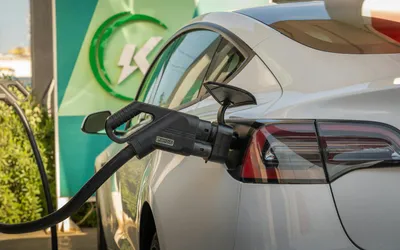
Tesla opened its Supercharger network to non-Tesla EVs through the NACS connector standard, and many manufacturers are adopting it for 2025 models. If your car has a CCS port, you may need a CCS-to-NACS adapter to use Tesla Superchargers, and availability of those adapters varies.
Before planning a route that depends on Supercharger access, confirm that your specific vehicle is supported at those locations. Some stations are enabled for third-party access and some are not. Tesla’s app or your car’s navigation system should show compatible stations, but real-world reports on PlugShare are a good cross-reference.
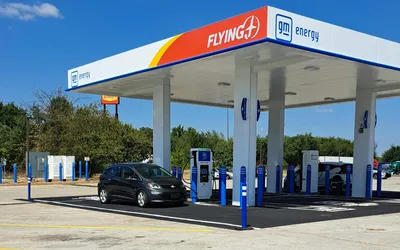
The broader charging landscape includes Electrify America, ChargePoint, EVgo, and a growing number of regional networks. Reliability varies by network and location. Having accounts set up and payment methods loaded on at least two or three networks before your trip eliminates fumbling with apps at the charger.
Always have a backup stop
Charger reliability is better than it was two years ago, but it is not perfect. A four-stall station with two broken units and one occupied leaves you waiting for a single charger. A station that shows as available on the app may have a payment system error that takes 20 minutes to resolve.
For every planned charging stop, identify at least one alternative within 15-20 miles. ABRP makes this easy by showing nearby chargers along your route. In rural stretches where options are limited, build in extra buffer — arrive with 25-30% charge instead of 15% so you have the range to reach the next option if the first one is down.
This is not pessimism. It is practical trip planning, the same way you would check for a second gas station on a remote desert highway.
Real-world range is not the EPA number
The EPA range estimate on your car’s window sticker assumes a specific mix of city and highway driving under moderate conditions. On a highway road trip at 75 mph with the AC running, loaded with luggage, you will get less. Plan for 15-20% below the EPA number as your working range.
Speed has the biggest impact. Most EVs lose 10-15% of their range going from 65 mph to 75 mph due to aerodynamic drag. Temperature matters too — both extreme heat (AC load) and extreme cold (battery chemistry and cabin heating) reduce range. Elevation changes add another variable. Climbing a mountain pass costs significantly more energy than the flat terrain the EPA test assumes.
Factor all of this into your planning, and a road trip becomes predictable instead of anxious. The car will tell you what it can do. Your job is to listen and plan accordingly.
Helpful references
- AFDC Electric Vehicle Basics — DOE resource on EV ownership and charging infrastructure
- FuelEconomy.gov — Compare EV range and efficiency ratings
Bottom line
EV road trips work well when you plan around your car’s charging curve, use reliable planning apps, and build in backup stops. The infrastructure is better than ever, but it rewards preparation over improvisation. Map your route, charge smart, and enjoy the drive.